Showing posts with label George W Bush. Show all posts

Sunday, July 22, 2007

Why Bush is A Loser (and Bill Kristol is a dangerous Idiot)


Redemption opportunity


My grandfather believed that the most horrible happening on earth can be redeemed if something good comes out of it. He also believed that redemption, of this kind, was clearly a human endeavor, not something mystical or mysterious.

Take the Iraq war, for example:

If, because of Bush's disastrous foreign policy, the brain-child of the neocons, the very word "neoconservative" becomes despised, as it should, like the words Nazi or "Librul," have come to be four-letter words, it will be a step toward redemption.

The people will be the judges, finally, because near universal disapproval/condemnation of an ideological movement always falls to the people.

If the Bush administration manages to destroy the GOP, and they are well on their way to doing just that, that will be a step toward redemption.

If the destruction of the GOP leads to a multi-party system in this country, all the better.

Why Bush Is A Loser

By David Corn
Tuesday, July 17, 2007; 7:45 PM

Who knew Bill Kristol had such a flair for satire?

How else to read his piece for Outlook on Sunday, in which he declared, "George W. Bush's presidency will probably be a successful one"? Surely Kristol, the No. 1 cheerleader for the Iraq war, was mocking himself (and his neoconservative pals) for having been so mistaken about so much. But just in case his article was meant to be a serious stab at commentary, let's review Kristol's record as a prognosticator.

On Sept. 18, 2002, he declared that a war in Iraq "could have terrifically good effects throughout the Middle East." A day later, he said Saddam Hussein was "past the finish line" in developing nuclear weapons. On Feb. 20, 2003, he said of Saddam: "He's got weapons of mass destruction.... Look, if we free the people of Iraq we will be respected in the Arab world." On March 1, 2003 -- 18 days before the invasion of Iraq -- Kristol dismissed the possibility of sectarian conflict afterward. He also said, "Very few wars in American history were prepared better or more thoroughly than this one by this president." He maintained that the war would cost $100 billion to $200 billion. (The running tab is now about half a trillion dollars.) On March 5, 2003, Kristol said, "We'll be vindicated when we discover the weapons of mass destruction."

After a performance like this -- and the above is only a partial review; for more details, click here -- Kristol, a likeable fellow, ought to have his pundit's license yanked. But he's back again with a sequel: W. will be seen as a wonderful president. His latest efforts should be laughed off op-ed pages. But in the commentariat, he's still taken seriously. So assuming the joke is indeed unintended, I'll examine Kristol's most recent fantasy as if it's real.

Iraq: Kristol says "we now seem to be on course to a successful outcome." The war has been a mess from the start, and these days even leading Republican senators no longer buy the argument that Bush's so-called "surge" is succeeding or can succeed as promised. Kristol contends that with the recent escalation "we are increasingly able to protect more of the Iraqi population." Many in Iraq would find little comfort in his assurances. Despite the "surge," Iraqi civilian deaths are still running at 2,500 to 3,000 a month. And since the "surge" began, according to the Pentagon's own numbers, the number of attacks on U.S. and Iraqi forces and Iraqi civilians has marginally increased.

Still, Kristol advises, stick with the "surge," train more Iraqi troops, and all will be well. The United States has already spent $19 billion training 346,500 or so Iraqi troops and police officers, and now merely six battalions -- down from 10, according to Gen. Peter Pace -- can function independently. That is, only 3,000 Iraqi troops are operating on their own after all this time and money.

Meanwhile, the Iraqi government is making little, if any, progress on key political matters that must be resolved, and the parliament is taking off August -- while American GIs continue to fight and die. What are they dying for? Kristol and Bush argue the war is a vital part of the battle against al Qaeda and international jihadism, and Kristol claims the U.S. military is "routing al Qaeda in Iraq." But, as the Los Angeles Times recently reported, of the 19,000 insurgents held by the U.S. military in Iraq, only 135 are foreigners. The United States is not fighting al Qaeda in Iraq; it's fighting Iraqis. Kristol is whistling past a graveyard -- filled with the bodies of thousands of American soldiers and probably hundreds of thousands of Iraqi civilians -- when he insists the United States is heading toward a "messy" victory.

And Kristol keeps arguing the past. The problems that have arisen in Iraq since the invasion, he maintains, have to be judged against what would have occurred had there been no invasion: a nuclear-armed Saddam conspiring with al Qaeda. To justify the war, Kristol is pushing the myth (debunked by U.S. intelligence) that Saddam was in cahoots with Osama bin Laden, and he's ignoring the fact that WMD inspectors were present in Iraq right before the invasion and (as we now know) doing a good job in determining Saddam had no unconventional weapons or nuclear bomb program. Such a policy could have been maintained.

Afghanistan: Steady as she goes, says Kristol. Well, not if you're one of those dozens of civilians who seem to be killed every few days in an errant attack from NATO and western forces. (Even Afghanistan President Hamid Karzai is fed up.) And shouldn't this war have been over years ago? Reconstruction is at a crawl The Taliban is resurgent. Opium production is setting new records. And the Bush administration (last time I checked) had no high-level official solely responsible for Afghanistan policy. Afghanistan has been a job neglected and unfinished.

Terrorism: Yes -- thankfully -- there have been no attacks here since 9/11. But recent intelligence reports say that al Qaeda (the real al Qaeda, not al Qaeda in Iraq) is becoming stronger. The man responsible for the worst act of terrorism ever visited upon the United States remains free. And the Bush administration's excesses in combating terrorism -- Guantanamo, warrantless wiretapping of Americans, and more -- have undermined the cause at home and abroad.

Foreign policy: Kristol does not mention that, thanks to Bush's misadventure in Iraq and other missteps, the United States' image abroad is in the sub-basement. He does note that we now have decent relations with Brazil. But he forgets about the worsening conflict between Israel and the Palestinians (and the other Palestinians) -- a conflict arguably exacerbated by Bush administration blunders.

The economy: All is fine, Kristol claims, pointing to conventional indicators and hailing Bush's tax cuts for the wealthy. But most Americans tell pollsters the country is not on the right track. Are they stupid? No, they are coping with various forms of insecurity and stress that Kristol does not recognize. Since 2000, the median income of working-age household has fallen each year. The economy has been growing, corporate profits are up, and the stock market is on the rise, but this recovery has handed working Americans weak growth in wages and salaries. The share of national income going to salaries and wages is at the lowest level since such stats were first compiled in 1929.

Moreover, the high costs of health care and education also worry many Americans. Kristol praises Bush's Medicare drug plan -- which routinely is assailed by critics on the left and right -- but Bush has done nothing to make health care more affordable and more available for most Americans. Forty-five million or so Americans remain uninsured. And while Kristol cheers globalization -- which is causing employment instability for Americans -- we can celebrate by eating tainted shrimp from China.

The Supreme Court: In Kristol's world, Chief Justice John G. Roberts Jr. and Justice Samuel A. Alito Jr., Bush's contributions to the court, are titans of jurisprudence respected throughout the land. Yet the Roberts court's recent decisions have sparked (justifiably) much controversy and rancor. In two separate decisions, Roberts protected corporate speech but trampled on the free speech rights of students. Roberts was also slammed by Justice Antonin Scalia for not having the guts to admit he was overturning precedent when he was. Bush's Supreme Court has become another battlefront in the partisan wars--not a symbol of accomplishment.

It's remarkable what Kristol leaves out of his bizarro-world view of Bush the Great: Hurricane Katrina, the collapse of the Justice Department, global warming, and much else. An American city was practically destroyed on Bush's watch, but that merits no consideration in Kristol's case for Bush. The Justice Department -- run by Bush cronies accused of corruption, incompetence, or both -- is in tatters. (A former department official tells me the administration is having a hard time finding people willing to fill the vacancies at the top.) And though Bush begrudgingly conceded that global warming is underway and human-induced, he has taken no significant steps to redress this pressing problem. If one wants to peer into the future, it could well be that Bush will be judged a failure more for his inaction on global warming than for his action in Iraq. Vetoing stem cell research legislation, commuting Scooter Libby's prison sentence, rewriting clean air rules to benefit industry, pushing tax breaks for oil companies, suppressing the work of scientists, enhancing government secrecy -- Bush has repeatedly placed parochial interests over the public interest.

The Bush-Cheney years have been marked by ineptitude, miscalculation, and scandal. A successful presidency? Bush will be lucky if he gets a public elementary school in his adopted hometown of Crawford, Tex., named after him. He has placed this country in a hole. Yet Kristol, with shovel in hand, points to that hole and says, Trust me -- we're about to strike oil!

If it's true that history repeats first as tragedy and then as farce, Kristol has short-circuited the process and gone straight to parody. His Bush boosterism -- an act of self-justification -- would be amusing were it not for all the damage he has helped Bush to cause.

David Corn, Washington editor of The Nation, is coauthor of "Hubris; The Inside Story of Spin, Scandal, and the Selling of the Iraq War." He blogs at www.davidcorn.com.


(In accordance with Title 17 U.S.C. Section 107, this material is distributed without profit to those who have expressed a prior interest in receiving the included information for research and educational purposes. The Lantern has no affiliation whatsoever with the originator of this article nor is The Lantern endorsed or sponsored by the originator.)

....And The Truth Shall Set Us Free
Thursday, July 19, 2007

Bush, Cheney, Rove: Evil to The Core (Cover-up; California Energy Crisis)

Why aren't these Jackasses in jail?

Does this action by Cheney come under the heading of "official duties," like the outing of a CIA NOC?

Just wondering.......

Cheney Suppressed Evidence in California Energy Crisis
By Jason Leopold
t r u t h o u t | Investigative Report

Thursday 19 July 2007

In-depth investigation shows how Vice President Dick Cheney pressured federal energy regulators to conceal evidence of widespread market manipulation by energy companies during the California electricity crisis in 2001.


In March 2001, while California's two largest utilities were teetering on the brink of bankruptcy, and the state's electricity crisis was spiraling out of control, Vice President Dick Cheney summoned Curt Hebert, the chairman of the Federal Energy Regulatory Commission (FERC), to his office next to the White House for a hastily arranged meeting.

Cheney had just been informed by his longtime friend Thomas Cruikshank, the man who handpicked the vice president to succeed him at Halliburton in the mid-1990s, that federal energy regulators were close to completing an investigation into allegations that Tulsa, Oklahoma-based Williams Companies and AES Corporation of Arlington, Virginia had created an artificial power shortage in California in April and May of 2000 by shutting down a power plant for more than two weeks.

Cruikshank was a member of Williams's board of directors, and perhaps more importantly, had been one of many energy industry insiders advising Cheney's energy task force on a wide-range of policy issues, including deregulation of the nation's electricity sector, that would benefit Williams financially.

Cruikshank informed the vice president he had learned about the preliminary findings of FERC's investigation during a Williams board meeting earlier in March 2001. FERC, Cruikshank told Cheney, was in possession of incriminating audio tapes in which a Williams official and an AES power plant operator discussed keeping a Southern California power plant offline so Williams could continue to receive the $750 per megawatt hour premium for emergency power California's grid operator was forced to procure to keep the lights on in Southern California.

AES was the operator of two power plants in Los Alamitos and Williams marketed the electricity. The power plants were designated by the California Independent System Operator (ISO), the agency that manages the state's power grid, as crucial in order to ensure a reliable flow of electricity in the Southern part of the state. To stave off the potential for blackouts, the ISO was given the authority to pay top dollar for power if the power plants operated by AES, as well as power plants operated by other companies, were not in operation.

California's electricity crisis wreaked havoc on consumers in the state between 2000 and 2001. The crisis resulted in widespread rolling blackouts and forced the state's largest utility, Pacific Gas & Electric, into bankruptcy. California was the first state in the nation to deregulate its power market in an effort to provide consumers with cheaper electricity and the opportunity to choose their own power provider. The results have since proved disastrous. The experiment has cost the state more than $30 billion.

According to a copy of the March 2001 Williams transcript, Rhonda Morgan, a Williams official, told an AES power plant operator "it wouldn't hurt Williams's feelings" if the power plant that was down for repairs was kept offline for an extended period of time so the company could continue to be paid the "premium" for its emergency energy supplies from the ISO. In a separate conversation with Eric Pendergraft, a senior AES official, Morgan said, "I don't wanna do something underhanded, but if there's work you can continue to do ..."

Pendergraft responded to Morgan, saying, "I understand. You don't have to talk anymore."

The collusion between Williams and AES allowed Williams to earn an extra $10 million over a period of 15 days and set in motion a series of events that resulted in the California power crisis between 2000 and 2001, a crisis that was based almost entirely on manipulative practices by energy companies.

This story is based on a two-month investigation into Cheney's energy task force; how the vice president pressured cabinet officials to conceal clear-cut evidence of market manipulation during California's energy crisis, and how that subsequently led Cheney to exert executive privilege when lawmakers called on him to turn over documents related to his meetings with energy industry officials who helped draft the National Energy Policy and also gamed California's power market. Truthout spoke with more than a dozen former officials from the Energy Department and FERC as well as current and former energy industry executives all of whom were involved in personal discussions with Cheney relating to the National Energy Policy.

In addition to Hebert, the FERC chairman, the other senior cabinet officials who attended the March 2001 meeting in Cheney's office included Andrew Lundquist, the former executive director of Cheney's energy task force, now an energy industry lobbyist, White House political adviser Karl Rove, President Bush's chief of staff Andrew Card, and Energy Secretary Spencer Abraham, according to former Energy Department and FERC officials who spoke on condition of anonymity because they said they were not authorized to disclose details of their secret meetings with Cheney or information about the energy task force meetings.

Joe Allbaugh, another adviser to the vice president’s energy task force, had heard of a similar situation involving an energy company his wife was involved with. Allbaugh told Cheney that Reliant Energy also shut down a power plant in California in June 2000. That caused wholesale power prices in California to reach levels that exceeded "just and reasonable" rates, a violation of the Federal Power Act. FERC apparently had audio tapes of Reliant employees discussing the scheme.

"[We] started out Monday losing $3 million ... So, then we decided as a group that we were going to make it back up, so we turned like about almost every power plant off. It worked. Prices went back up. Made back about $4 million, actually more than that, $5 million," the Reliant trader says in a tape-recorded conversation on June 23, 2000.

Allbaugh's wife, Dianne Allbaugh, was a lobbyist for Reliant, TXU and Entergy, who was paid at least $20,000 a month by those corporations, and told her husband what she had learned from executives at Reliant. Allbaugh then informed Cheney.

Cruikshank and Allbaugh did not return dozens of calls or respond to emails seeking comment. Devona Greenstone, a spokeswoman for Hebert, was sent a detailed list of questions for Hebert to answer and was given more than one week to respond to the queries. But neither Greenstone nor the former FERC chairman replied despite numerous follow-up phone calls and emails sent to Hebert and Greenstone. A spokesperson for Cheney also failed to return 16 messages left for comment over the past month.


If You Were "King" or "Il Duce"?

Joseph Kelliher, a former Energy Department official, had been soliciting advice from Williams, Reliant, El Paso, Enron and other energy companies on natural gas issues on behalf of Cheney, another area those companies were accused of gaming, particularly in California.

In a March 10, 2001 email, just a week or so after Cheney was briefed by Cruikshank about the Williams scheme, Kelliher emailed energy lobbyist Dana Contratto, asking Contratto if he was "King or "Il Duce, what would you include in a national energy policy, especially with respect to natural gas issues?", according to energy task force documents.

Contratto responded with a three-page list of ideas, many of which were included in the final version of the energy policy.

On another occasion, Kelliher sought out Stephen Craig Sayle, an Enron Corp. lobbyist, to make similar recommendations. Sayle, former counsel for the House Commerce Committee, sent Kelliher Enron's "dream list." The list included a recommendation that the administration commit to market-based emissions trading, which was also used in administration's National Energy Policy.

Sayle wrote Kelliher about the energy policy, saying, "a multi-pollutant regulatory strategy should be estimated for the power generation sector including: Gradually phased in [mercury, nitrogen oxides and sulfur dioxide emissions] reductions; reform/replacement of NSR; use of market-based/emission trading programs; inclusion of both existing and new plants and equal treatment for both. The last bullet is the critical one to ensure that: a) we encourage the new generation that is required; b) we ensure that the new technologies developed through DOE programs can come into the market.

"Obviously, this is a dream list," Sayle said in the March 23, 2001 email he sent to Kelliher. "Not all will be done. But perhaps some of these ideas could be floated and adopted."

Sayle also provided Kelliher with a PowerPoint presentation on behalf of his other energy clients in the so-called Clean Power Group, a consortium made up of a handful of the country's biggest energy companies, including NiSource Inc., Calpine Corp., Trigen Energy Corp. and El Paso Corp, whose mission, according to the group's web site, is to "streamline requirements under the Clean Air Act for electric generating facilities while at the same time making major reductions in air emissions."

The PowerPoint presentation, A Comprehensive Multi-Pollutant Emission Control Strategy for Power Generation, summarized the Clean Power Group's support of a "cap and trade" method in addressing emissions of mercury, nitrogen oxides and sulfur dioxide from power plants, but included a proposal for a voluntary cap on carbon dioxide. The Clean Power Group stood to benefit from the initiative it urged Kelliher to get the White House to adopt in that the companies could release more emissions under its proposed plan than under the more restrictive rules the Clinton administration had put in place.

After receiving Sayle's email and supporting material, Kelliher recommended that President Bush "direct the Administrator of the Environmental Protection Agency (EPA) to propose multi-pollutant legislation that would establish a flexible, market-based program to significantly reduce and cap emissions; provide regulatory certainty to allow utilities to make modifications to their plants without fear of new litigation; provide market based incentives, such as emissions-trading credits to help achieve the required reductions," all of which the president approved and was eventually incorporated into the National Energy Policy.

In fact, President Bush's "Clear Skies" initiative consists of many of the bullet points laid out months earlier in Sayle's email to Kelliher.

In addition to Kelliher's correspondence with Sayle, he also met with oil and gas industry lobbyists who helped draft language that Kelliher passed on directly to the White House. Two months later, the president issued executive orders nearly identical to those Kelliher received from the lobbyists months earlier, according to energy task force documents.

Kelliher now chairs FERC, the agency that is entrusted with keeping a close eye on wholesale energy markets, ensuring that companies like Williams and Reliant refrain from engaging in the type of manipulative practices they were caught doing during the spring and summer of 2000 in California.


Cheney Orders FERC to Seal Evidence

But the documentary evidence of widespread market manipulation that FERC obtained in March 2001, while Kelliher was soliciting energy industry officials to assist in writing the National Energy Policy, and when Cruikshank and Allbaugh disclosed to the vice president the manipulative tactics Williams and Reliant had engaged in, was sealed by FERC on direct orders by Cheney because it would have been a political nightmare for the Bush administration and would have derailed a recommendation of one of the cornerstones of the vice president's National Energy Policy: deregulation, and perhaps scuttle the policy altogether if evidence about the energy companies behavior in California was made public, according to half-a-dozen former FERC officials and former Energy Department officials.

So in May 2001, just days before Cheney unveiled his long-awaited National Energy Policy, FERC entered into confidential settlements with Williams in which the company forfeited $8 million it was owed by California's grid operator for power Williams sold into the marketplace at inflated prices. Williams did not admit any guilt for the power plant shutdown and, on orders from Cheney, FERC agreed to keep details of the settlement sealed. FERC later entered into a similar settlement with Reliant. The company agreed to forfeit $13.8 million it was owed by California's grid operator, did not admit to any wrongdoing, and FERC kept the details of the settlement confidential.


Moreover, FERC kept California officials in the dark about the nature of the state's claims that its wholesale electricity market was being manipulated. Hebert is now the vice president of external affairs for Entergy in New Orleans.

For former Governor Gray Davis, the illegal behavior by energy companies like Williams that federal energy regulators discovered, then covered up, during a time when the former governor had said publicly he believed such behavior had taken place, is beyond disturbing.

Instead of protecting the interests of consumers, FERC's primary job, Hebert toed the White House line and together with Cheney, Hebert had come out publicly to say that Davis should immediately order the California Public Utilities Commission to relax environmental restrictions on the permitting process related to power plant construction and raise electricity rates to keep utilities Pacific Gas & Electric and Southern California Edison from becoming insolvent. The insolvency issue was due to the fact that the utilities were paying higher prices for power than it was legally allowed to charge its customers under the state's deregulation law.

In an interview, Davis, now an attorney with Loeb & Loeb in Century City, California, said he never saw the evidence FERC had obtained implicating Williams in shutting down power plants in the state.

"If I had hard evidence that this was happening, I would have stood out in front of the Congress until they did something," Davis said. "I thought there was something rotten going on but I never believed that these energy companies would outright steal from us."

"This was an absolute outrage and was based on pure greed," Davis added. "I clearly didn't know this was happening with Williams. I think FERC perpetrated a fraud on the American public and California consumers by sealing the findings of this investigation while I was out there saying that this type of manipulation was happening. I think that if the results of this investigation were made public in March 2001, when FERC knew this was taking place, it would have stopped energy deregulation in America in its tracks. This admission in effect by Williams would have been the death knell for energy deregulation."

Davis had a tumultuous relationship with the federal agency that appeared to be based on partisan politics. Just three months before Cruikshank and Allbaugh provided Cheney with details that the energy companies they were affiliated with had gouged California consumers and violated the state's market rules, the vice president, and FERC's chairman, railed against Davis, blaming the energy crisis on him and said the governor's claims that energy companies were acting like a "cartel" were baseless.

"The basic problem in California was caused by Californians," Cheney said, adding that he would resist calls by lawmakers to allow price caps to be placed on wholesale energy prices in the Western United States.

Even after Hebert had secured evidence showing that Williams manipulated the power market, he continued to pin the blame for skyrocketing power prices squarely on the shoulders of Davis and the state's Democratic leaders.

"I went to FERC and laid out our problems and was promised they would look into it. Nothing happened," Davis said. "My experience with FERC during the energy crisis was wholly unsatisfactory. I did not ever feel that they believed their job was to act in the public interest. I always believed they were acting in the interests of the energy companies. They operated as if they were a wholly owned subsidiary of the energy companies."

Hebert, however, fell out favor with the Bush administration when he privately opposed a recommendation by Ken Lay, made to Cheney, to open up the country's transmission lines to corporations such as Enron. Lay requested Cheney and Bush replace Hebert, which they did in the summer of 2001.


PG&E Files for Bankruptcy; Rove Orchestrates Political Spin Campaign

In a televised speech to California residents on April 5, 2001, Davis resisted Cheney's and Hebert's calls to increase electricity rates for average consumers to keep the state's public utilities afloat, opting instead to increase electricity rates of the state's largest power customers such as manufacturing plants. The next morning PG&E filed for Chapter 11 bankruptcy protection.

Davis publicly railed against the Bush administration's refusal to launch an investigation into wholesale energy companies trading practices, and its position on price caps. Davis's rhetoric started to impact the Bush administration's approval ratings. Rove, working closely with Cheney, entered into discussions on how the White House would respond to criticism by Davis that the Bush administration was turning its back on California.

"Karl [Rove] started to talk about using the resources of former Republican National Committee staffers to put together an attack campaign against Davis, and pin the power problems on the governor and his administration," according to one former high-level Energy Department official who was privy to the conversation between Rove and Cheney.

Rove enlisted the help of former RNC staffers Ed Gillespie, then a lobbyist who was working for Enron and other energy companies, and Scott Reed, who used to work for the RNC and was the former manager of Robert Dole's presidential campaign, to start devising a strategy to attack Davis and lead people to believe that the energy crisis was entirely his fault. Gillespie was recently tapped by President Bush to replace Dan Bartlett as White House counselor.

Reed and Gillespie, who was doing double duty advising Cheney's energy task force on behalf of Enron, advised Rove and the vice president that the PG&E bankruptcy left Davis vulnerable and the best course of action for the White House was to take advantage of Davis's vulnerability by stating that Davis single-handedly, in refusing to raise electricity rates, caused one of the largest bankruptcies in American history. Gillespie went a step further, according to Energy Department officials familiar with his conversations with Rove and Cheney, by suggesting that the White House start courting Republican gubernatorial candidates to replace Davis in the 2002 election.

At the White House in April 2001, Rove met with Brad Freeman, President Bush's California finance chairman during the 2000 presidential campaign, and Gerald Parsky, an investment banker, who was Bush's top adviser in California. The discussion centered on Parsky and Freeman's interest in courting actor Arnold Schwarzenegger to discuss his bid for governor in 2002.

"That would be nice," Rove said about the possibility of Schwarzenegger, a Republican, to replace Davis as governor, according to people who were briefed about the meeting. "That would be really, really nice."

Davis said he could see now see how the energy crisis created a political opportunity for the White House in California.

"In retrospect I could see how that happened," Davis said. "There's no question that the energy companies saw me as an adversary when I wouldn't buckle under their demands. I was vulnerable and the [energy companies and the White House] took advantage of it. This crisis took place in the early days of the Bush administration. I figured these guys are too busy picking out furniture for their offices. I didn't think they [the Bush administration] were spending their days in office involved in some full-scale conspiracy. But it turns out they were."


Cheney Takes Aim at Davis

Meanwhile, Cheney continued to meet with energy company officials who were instrumental in drafting key aspects of the National Energy Policy. At the same time, the usually reclusive vice president was granting interviews to numerous reporters discussing his take on the California energy crisis which continued to spiral out of control.

In May 2001, the PBS news program "Frontline" interviewed Cheney who was asked by a correspondent whether energy companies were acting like a cartel and using manipulative tactics to cause electricity prices to spike in California.

"No," Cheney said during the "Frontline" interview, even though he was personally briefed about energy companies manipulating the state. "The problem you had in California was caused by a combination of things - an unwise regulatory scheme, because they didn't really deregulate. Now they’re trapped from unwise regulatory schemes, plus, not having addressed the supply side of the issue. They've obviously created major problems for themselves and bankrupted PG&E in the process."

The same month, May 2001, Davis met with Bush at a Century City hotel, not far from the offices he now works at as an attorney. He pleaded with Bush one last time to put price controls in place. Bush refused.

Behind the scenes, while Bush and Davis discussed the state of the energy crisis, Gillespie was emailing Enron officials on the status of Cheney's energy policy. He alerted Enron executives to the exact language that would appear on one of the hot-button issues revolving around price caps in California and the west and allowing energy companies free access to the nation's transmission lines.

"I believe this is the exact language that will appear under the 'energy supply' section of the report," Gillespie wrote. "Recommends that the President encourage the FERC to use its existing statutory authority to promote competition and encourage investment in transmission facilities," which Enron was lobbying heavily for. "Please keep this under wraps. We do not want to circulate this beyond the folks listed on this email. Please let me know any concerns. As we have known for several weeks, the report is not as explicit as we would want, but the White House, vice president, and [Department of Energy] have repeatedly but verbally assured us that they are making clear to FERC exactly what this means."

Another email Gillespie forwarded Enron officials, dated May 17, 2001, came from Cheney's spokeswoman, Juleanna Glover, who told Gillespie "you're really relied upon around here ... hear your name all the time in connection w. tough issues, but you know that already."

On May 21, 2001, five days after unveiling his energy policy, Cheney told Tim Russert on "Meet the Press" that Davis was to blame for the energy issues in the state.

"They knew over a year ago they had a problem, and Gray Davis refused to address that problem," Cheney said. "[They] kept putting it off and putting it off and putting it off, with the notion that somehow price caps could be maintained. Now, today, where are they in California?"


GOP Front Group Attacks Gray Davis, Shields Bush, Cheney

At the same time, Reed informed Rove and Cheney that his nonprofit, the American Taxpayers Alliance, a Republican front organization, would begin to air a series of scathing radio commercials taking aim at Davis's failure to tame the energy crisis in June 2001. The ads, Reed said, were aimed to shift attention away from Republicans in Washington and "back to Sacramento where it belongs." Reed added that the ads would leave Davis "bleeding like a stuck pig."

The ads, which began to air in June 2001, did in fact make an impact:

"He's pointing fingers and blaming others. Gray Davis says he's not responsible for California's energy problems; after all, the Public Utilities Commission blocked long-term cost-saving contracts for electricity. But who runs the PUC? The people Gray Davis appointed - Loretta Lynch and other Davis appointees who left us powerless. That's why newspapers say he just ignored all the warning signals and turned a problem into a crisis. Grayouts on Gray Davis."

The ads and the negative press Davis received helped set in motion a chain of events that would lead to a historic recall campaign and put Schwarzenegger in office.

What the public didn't know, however, is that Cheney and Rove recommended that Reed approach Reliant Energy, the firm that one of Cheney's energy task force advisers, Joseph Allbaugh, was affiliated with via his wife's lobbying for the company, to fund the radio spots, according to former Reliant executives involved in the matter. Reliant donated nearly $2 million of Reed's $3.2 annual budget, yet the company only reported spending a total of $340,000 on government lobbying in apparent violation of the law, according to the company's public records.

Gillespie also launched a public relations campaign against Davis. He took ads out in print publications attacking Davis. The ads were paid for by Gillespie's 21st Century Energy Project, which he formed in close coordination with Karl Rove less than a month after the National Energy Policy was released in May 2001, according to former Enron executives who worked closely with Gillespie. Enron funneled at least $75,000 to Gillespie to pay for the ads through Grover Norquist's Americans for Tax Reform, according to documents obtained by Truthout.

Russ Schriefer, who worked with Gillespie on Bush’s presidential campaign and formed Mosaic Media with Quinn Gillespie in February 2001 to produce advocacy ads for Republicans, wrote the Davis ads. The ads aired on ABC, Fox and CNN.

Norquist, a longtime friend of Cheney's, was personally tapped by Rove to assist Gillespie with the ad campaign. Norquist may be best known for his close relationship with disgraced lobbyist Jack Abramoff. One of Abramoff's clients, Raul Garza, chief of the Kickapoo Traditional Tribe of Texas, donated $25,000 to Norquist's organization in order to obtain an invitation to a reception with President Bush on May 9, 2001. Norquist and Abramoff were also in attendance and a photograph of Garza standing alongside Bush with Abramoff in the background was kept from public view when the Abramoff scandal blew up. Bush had denied publicly that he ever met Abramoff.

At the time, Gillespie said the ads were necessary "because Davis put all his time and energy into trying to shift responsibility and President Bush spent all his time and energy trying to accept responsibility. The president is trying to change the tone, but others of us have to point out that the crisis developed on the watch of Governor Davis and President Clinton."


Executive Privilege

Immediately following reports that Cheney relied upon the recommendations of 400 energy industry executives to draft the National Energy Policy, lawmakers began to demand that the vice president turn over documents regarding his task force meetings to Congress. The vice president vehemently refused.

With White House Counsel Alberto Gonzales weighing in on the issue, the administration exerted "executive privilege" as the reason it refused to turn over task force documents to Democratic lawmakers. The issue reached the Supreme Court that ruled in Cheney's favor. As Attorney General, Gonzales still refuses to publicly release audiotapes from 2000 and 2001 in which other energy companies were also found to have discussed ways in which to manipulate the California energy market. Some of the heads of those companies implicated in the crisis also provided Cheney with input on the National Energy Policy.

In 2004, Reliant became the first energy company that was indicted for its role in manufacturing the California energy crisis. A year later, the company refunded California $453 million.

Last month, two power companies agreed to pay California $84 million to settle charges stemming from the 2000-2001 California energy crisis.

PacifiCorp, a unit of MidAmerican Energy Holdings Co., paid the state $27.9 million to resolve claims that it manipulated the California and Pacific Northwest electricity markets in 2000 and 2001. MidAmerican Energy Holdings is a subsidiary of Warren Buffet's Berkshire Hathaway Inc.

In a second case, a subsidiary of Houston-based El Paso Corp. paid California $56 million.

Joseph Kelliher, the chairman of FERC, and the man who, on behalf of Cheney in March 2001, lobbied these very companies to help write the National Energy Policy, helped negotiate the settlements.

Davis feels vindicated in light of the refunds paid to California consumers, which, to date, have totaled about $6 billion. He said that he believes he would likely never have faced a recall if FERC publicly released details of its investigation into Williams in March 2001. But despite what he knows now Davis doesn't hold a grudge against the individuals responsible for using the energy crisis to have him recalled.

"No one ever said life is fair," Davis said.


Jason Leopold is a former Los Angeles bureau chief for Dow Jones Newswire. He has written over 2,000 stories on the California energy crisis and received the Dow Jones Journalist of the Year Award in 2001 for his coverage on the issue as well as a Project Censored award in 2004. Leopold also reported extensively on Enron's downfall and was the first journalist to land an interview with former Enron president Jeffrey Skilling following Enron's bankruptcy filing in December 2001. Leopold has appeared on CNBC and National Public Radio as an expert on energy policy and has also been the keynote speaker at more than two dozen energy industry conferences around the country.


(In accordance with Title 17 U.S.C. Section 107, this material is distributed without profit to those who have expressed a prior interest in receiving the included information for research and educational purposes. The Lantern has no affiliation whatsoever with the originator of this article nor is The Lantern endorsed or sponsored by the originator.)

....And The Truth Shall Set Us Free
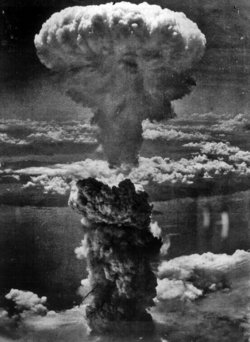
"Evil Killers" Come In All Kinds And Sizes

The results of their actions are always the same: terror, maiming, death, destruction, chaos; a hellish nightmare for all who get caught up in their plans for horror and money-making.

It matters not whether they wear bed sheets or $1,000.00 suits, turbans or cowboy hats...the results are always the same.

When will we ever learn?


Bush's Wooden-Headedness Kills
By Ray McGovern
t r u t h o u t | Guest Contributor

Thursday 19 July 2007

President George W. Bush is convinced, in the face of all evidence to the contrary, that he is on the right course in the war in Iraq and the struggle against terrorism. He says he will not change his mind. Thus, we are at a historic moment, and we would be well advised to see what light historians might shed on our current predicament in Iraq and the basic (but unanswered) question as to why so many people resort to terrorism against us.

Historian Barbara Tuchman addressed the kind of situation we face at this juncture in our country's history in her best-selling book, "The March of Folly: From Troy to Vietnam." (Had she lived, she surely would have updated the book to take Iraq into account).

Tuchman wrote:

"Wooden-headedness ... plays a remarkably large role in government. It consists of assessing a situation in terms of preconceived fixed notions while ignoring or rejecting any contrary signs. It is acting according to wish while not allowing oneself to be deflected by the facts."

Tuchman referred in this context to the 16th century's Philip II of Spain as the Nobel-laureate (so to speak) woodenhead of all time: "No experience of the failure of his policy could shake his belief in its essential excellence." Comparisons, I know, can be invidious, but Philip amassed too much power and drained state revenues by failed adventures overseas, leading to Spain's decline. Sadly, Tuchman, who died in 1989, cannot opine as to whether history will see George W. Bush as having displaced Philip as supreme woodenhead. Bush would have a good shot at it, it seems to me.

A foolish consistency is the hobgoblin of little minds. - Ralph Waldo Emerson

In her book, Tuchman emphasized that courtiers can reinforce the ruler's certitude, as was the case with Philip and is the now the case with George. And if the courtiers are really good at it, they are awarded the Medal of Freedom - as was the case with former CIA Director George Tenet, former Army General Tommy Franks, and former US proconsul in Baghdad Paul Bremer - each of whom richly deserved a "Heck of a job, Brownie" type of salute. As Tuchman pointed out:

"Once a policy has been adopted and implemented, all subsequent activity becomes an effort to justify it.... Adjustment is painful. For the ruler it is easier, once he has entered the policy box, to stay inside. For the lesser official it is better ... not to make waves, not to press evidence that the chief will find painful to accept. Psychologists call the process of screening out discordant information "cognitive dissonance," an academic disguise for "Don't confuse me with the facts."

Bush's genius is that he knows this instinctively - without having to take Tuchman's book to read in Crawford. And, by all signs, he likes it that way. That is why he has assembled a truly amazing array of sycophants around him, whose only pedigree is loyalty to George W. Bush.

And that is precisely why we Veteran Intelligence Professionals for Sanity (VIPS), in our first Memorandum for the President (February 5, 2003), closed with this admonition:

"After watching Secretary Powell today [giving his speech at the UN], we are convinced that you would be better served if you widened the discussion beyond violations of Resolution 1441, and beyond the circle of those advisers clearly bent on a war for which we see no compelling reason and from which we believe the unintended consequences are likely to be catastrophic."

Our views, and those of others - like Scott Ritter, who knew more about what had happened to Iraqi "weapons of mass destruction" than virtually anyone - made no dent in the wooden head. Not that the president really believed there were such weapons there. If he did, he was badly misled by Vice President Dick Cheney, who was well aware that the "evidence," such as it was, was bogus. Senior White House officials told my former colleagues at CIA eight months before the war that they needed to focus on "regime change," not WMD. And the White House did not wish to hear any more about WMD from CIA's supersource - the Iraqi foreign minister, whom CIA operations officers had "turned" to work in place for the US rather than for Saddam.

The Attack on Iraq and Terrorism

In the same February 5, 2003 memorandum, we strongly warned the president (as did many others) of the consequences, should he order our troops to invade Iraq:

"It is our view that an invasion of Iraq would ensure overflowing recruitment centers for terrorists into the indefinite future. Far from eliminating the threat it would enhance it exponentially."

We cited a CIA study done the previous fall that pointed out:

"The forces fueling hatred of the US and fueling al-Qaeda recruiting are not being addressed ... the underlying causes that drive terrorists will persist."

And we noted that that CIA report cited a 2002 Gallup poll of almost 10,000 Muslims in nine countries in which respondents described the United States as "ruthless, aggressive, conceited, arrogant, easily provoked and biased." We hoped against hope that someone could break through the coterie around President George W. Bush and give him a chance to hear why "they hate us." Someone, for example, from the US Defense Science Board, a panel established to provide independent advice to the secretary of defense, which on September 23, 2004 completed on an unclassified study on "Strategic Communication." With little risk to their day jobs, that distinguished board directly contradicted the line taken by the president:

"Muslims do not 'hate our freedom,' but rather, they hate our policies. The overwhelming majority voice their objections to what they see as one-sided support in favor of Israel and against Palestinian rights, and the longstanding, even increasing support for what Muslims collectively see as tyrannies, most notably Egypt, Saudi Arabia, Jordan, Pakistan, and the Gulf States. Thus, when American public diplomacy talks about bringing democracy to Islamic societies, this is seen as no more than self-serving hypocrisy ..."

It is hard to guess whether such straight talk might make a dent in presidential wood. The pity is that the palace guard around him headed by centurion-in-chief Cheney can, and does, keep such information from getting through. Even if the president were to read The New York Times, as many of us still do, he would have had to wait two months for the "paper of record" to put this story on the record and, even then, he would have been shortchanged.

Times writer Thom Shanker, to his credit, wrote a story on the findings of the Defense Science Board panel on November 24, 2004 (better two months late than never). Shanker, too, cited the paragraph immediately above, but only the first and last sentences survived. To someone's discredit, the offending middle sentence was surgically removed before the paper went to press.

NIE Ducks Key Issues

The latest National Intelligence Estimate (NIE) titled "The Terrorist Threat to the US Homeland," is a disappointment, at least judging from its declassified Key Judgments that were made public on July 17. The judgments caused a stir by describing a "persistent and evolving terrorist threat" and pointing out that al-Qaeda has secured safe haven in the border area between Pakistan and Afghanistan.

And then came the "mushroom-cloud" warning:

"al-Qaeda will continue to try to acquire and employ chemical, biological, radiological, or nuclear material in attacks and would not hesitate to use them if it develops what it deems is sufficient capability."

Now that I've got your attention, I must tell you there is in the Key Judgments absolutely no hint as to how likely it might be that al-Qaeda will be able to acquire such material. The message seems to be simply: Be afraid. Let us "assess" and "judge," but don't ask us about sources or provenance.

The Unaddressed Why of It All

Worse still, the Key Judgments throw no light at all on why al-Qaeda or other terrorist groups would want to use such weapons against the US. With this key element missing, the paper reads like a long police bulletin: Be alert; heightened threat; terrorists want to do bad things to us. We don't know if they can; but "we assess" they will try to do very bad things ... and don't ask us why. They're evildoers; is that not enough for you?

The estimate bears the earmarks of having been drafted originally by law enforcement agencies like the Department of Homeland Security, whose portfolio includes terrorist threats to the US, and the FBI. There are pitfalls here. There is a tendency to inflate the threat, when one has a parochial interest in building up one's capacity to deal with it

In the past, the Pentagon would routinely magnify external threats by writing what we disdainfully called "budgetary intelligence" to justify burgeoning budgets. There is more than a whiff of that in the Key Judgments. The National Intelligence Council, which has purview over NIEs, is supposed to monitor this. But there is no sign in the Key Judgments that judicious restraint has been applied.

So, even if the president and Cheney wished to know what actually fuels all this terrorism, they would receive little if any help from this estimate.

Help Needed

And since 9/11, the Michael (Heck-of-a-Job-Brownie) Browns have proliferated in the national security apparatus almost as quickly as lapel flag pins.

Ms. Fran Townsend, the young woman with the portfolio for terrorism at the National Security Council, seems ill-suited to the job. She confessed to being frustrated at al-Qaeda's success in rebuilding its infrastructure and links to affiliates and the fact that Osama bin Laden and his top lieutenants have found safe haven, as the estimate makes clear.

And she was far from comfortable responding to journalists' questions, as can be seen from her answer to this one:

Q. The president was warned before the war that this was actually going to help al-Qaeda gain influence.... Isn't that something the president ignored?

A. But you're assuming this is a zero-sum game, which is what I don't understand. The fact is, we are harassing them in Afghanistan. We're harassing them in Iraq. We're harassing them in other ways non-militarily around the world. And the answer is, every time you poke the hornet's nest, they are bound to come back and push back on you. That doesn't suggest to me that we shouldn't be doing it.

Is this what passes for a strategic plan to counter terrorists? If so, it certainly highlights the need for adult supervision in the White House... and for creating the capability to prepare honest, sophisticated estimates, which in turn can enable policies of some vision and imagination.

But all this matters little, if wooden-headedness continues to prevail with the president and Cheney. As long as they are permitted to preside over keystone-cops law enforcement operations, with an occasional military surge here and there, the men and women in our armed forces, and the rest of us, will be in greater danger.

In the end, though, wood is not difficult to drill through with the proper tools.

Thanks to the prescience and courage of those who crafted our Constitution, a wood tool is available. It is a precision tool that, with some courage, can be employed almost immediately. It is called impeachment, the orderly political process the Founders left to us for use when the president and/or vice president or other high official needs to be removed to save the Republic.

Let the members of Congress, who enjoy calling one another "distinguished," distinguish themselves by rising to the occasion. As Dr. Martin Luther King Jr. reminded us at another such juncture, there is such a thing as too late. Too late has already come to more than 3,600 young men and women in our armed forces, as well as thousands now missing limbs and other once functional parts of their bodies and minds. Not to mention the carnage visited on hundreds of thousands more whose only sin is that they are Iraqis.

---------

Ray McGovern works with Tell the Word, the publishing arm of the ecumenical Church of the Saviour in Washington, DC. During his 27-year career as a CIA analyst, he chaired National Intelligence Estimates and prepared/briefed the President's Daily Brief. He is on the Steering Group of Veteran Intelligence Professionals for Sanity (VIPS).

This article appeared originally on Consortiumnews.com.


(In accordance with Title 17 U.S.C. Section 107, this material is distributed without profit to those who have expressed a prior interest in receiving the included information for research and educational purposes. The Lantern has no affiliation whatsoever with the originator of this article nor is The Lantern endorsed or sponsored by the originator.)

....And The Truth Shall Set Us Free


Georgie and Osama


They couldn't make it without each other..

The rest of us on the planet would be much netter off without both of them, their seconds and the rest of their delusional followers.

Bush Is al-Qaeda's Strategic Ally

By Robert Parry
July 19, 2007

U.S. officials have finally admitted what has long been obvious: that George W. Bush’s “global war on terror” has been an expensive failure, costing hundreds of billions of dollars and claiming possibly hundreds of thousands of lives, but making the world no safer and quite likely more dangerous.

Bush’s top counterterrorism advisers acknowledged as much on July 17 in releasing a summary of a National Intelligence Estimate that represented the consensus view of the U.S. intelligence community.

The report, entitled “The Terrorist Threat to the U.S. Homeland,” described a resurgent al-Qaeda that has regrouped in remote sections of Pakistan while exploiting Muslim anger over the war in Iraq to increase its operational strength internationally and to take aim at American targets, again.

“We assess that al-Qaeda will continue to enhance its capabilities to attack the [U.S.] homeland through greater cooperation with regional terrorist groups,” the NIE said. “Of note, we assess that al-Qaeda will probably seek to leverage the contacts and capabilities of al-Qaeda in Iraq [AQI], its most visible and capable affiliate and only one known to have expressed a desire to attack the [U.S.] homeland.

“In addition, we assess that its association with AQI helps al-Qaeda to energize the broader Sunni extremist community, raise resources, and to recruit and indoctrinate operatives, including for [U.S.] homeland attacks.”

In other words, Bush’s repeated warnings that the United States must fight Islamic extremists in Iraq so “we don’t have to fight them here” or so "they won't follow us home" turn out to be the opposite of the truth: because U.S. forces are occupying Iraq, al-Qaeda has more resources and more recruits determined to bring the war to the United States.

The underlying reality is that Bush remains the perfect foil for al-Qaeda and other Islamic extremists. The surging anti-Americanism, which derives from a widespread hatred of Bush, represents a recruitment boon for al-Qaeda, so much so that Osama bin Laden and other terrorist leaders understand that Bush and his stubbornness are indispensable assets to their cause.

Almost six years into the “war on terror,” Bush has overseen a strategy that has simultaneously alienated world public opinion – with torture scandals over Guantanamo Bay, Abu Ghraib and secret CIA prisons – while fueling Islamic extremism and giving new life to the 9/11 masterminds.

Unilateralist Arrogance

Much of the current dilemma can be traced to Bush’s special mix of arrogance and rashness. In 2001, even before the 9/11 attacks, Bush adopted a “unilateralist” approach to the world, asserting U.S. global hegemony under a strategy laid out by the neoconservative Project for the New American Century.

At the center of this grandiose scheme was the belief that the oil-rich Middle East could be remade through violent “regime change” in hostile Arab countries like Iraq. Bush later broadened his target list to the “axis of evil,” tossing in Iran and North Korea and making clear that other lesser enemies included the likes of Syria, Cuba and Venezuela.

While this neoconservative plan wrapped itself in the noble language of “democracy,” the concept was always less about respecting the will of indigenous populations than in restructuring their economies along “free market” lines and ensuring compliant leaders.

Bush also grew enamored with his “gut” instincts about war, especially after U.S.-backed forces ousted Afghanistan’s Taliban leaders more quickly than many expected. Even though he let top al-Qaeda leaders slip away from Tora Bora in late 2001, Bush ignored warnings that he needed to finish the job there before turning America’s attention elsewhere.

Bush redirected the U.S. military toward Iraq, a country that wasn’t involved in 9/11 and actually had served as a bulwark against Islamic fundamentalism, both the strains from Shiite-ruled Iran and Sunni-dominated al-Qaeda.

But Iraqi dictator Saddam Hussein was something of a Bush family obsession since he angered President George H.W. Bush in the Persian Gulf War of 1990-91. In March 2003, Bush launched an invasion of Iraq and toppled Hussein’s government in three weeks.

After basking again in public adulation as the victorious “war president,” Bush stubbornly refused to acknowledge the growing seriousness of an Iraqi insurgency that rose up to challenge U.S. forces.

The U.S. occupation of Iraq – combined with the abuse scandals at U.S.-run prisons – fed popular anger across the Middle East. Thousands of young jihadists rallied to the cause of ousting the Americans from Muslim lands.

As the body count in Iraq grew, Bush dug in his heels even deeper. When Iraq slid into chaos and then civil war, Bush again refused to acknowledge the facts in a timely fashion.

Meanwhile, over the past six years, the wily and ruthless leaders of al-Qaeda came to understand that Bush was an invaluable poster boy. The more he was viewed as the “big crusader,” the more they could present themselves as the “defenders of Islam.” The al-Qaeda murderers moved from the fringes of Muslim society closer to the mainstream.

So, in fall 2004, with Bush fighting for his political life against Democrat John Kerry, bin Laden took the risk of breaking nearly a year of silence to release a videotape denouncing Bush on the Friday before the U.S. election.

Bush’s supporters immediately spun bin Laden’s tirade as an “endorsement” of Kerry and pollsters recorded a jump of several percentage points for Bush, from nearly a dead heat to a five- or six-point lead. Four days later, Bush hung on to win a second term by an official margin of less than three percentage points. [For details, see our new book, Neck Deep: The Disastrous Presidency of George W. Bush.]

Boomerang Effect

The last-minute intervention by bin Laden – essentially urging Americans to reject Bush – had the predictable effect of driving voters to the President. After the videotape appeared, senior CIA analysts concluded that ensuring a second term for Bush was precisely what bin Laden intended.

“Bin Laden certainly did a nice favor today for the President,” said deputy CIA director John McLaughlin in opening a meeting to review secret “strategic analysis” after the videotape had dominated the day’s news, according to Ron Suskind’s The One Percent Doctrine, which draws heavily from CIA insiders.

Suskind wrote that CIA analysts had spent years “parsing each expressed word of the al-Qaeda leader and his deputy, Ayman al-Zawahiri. What they’d learned over nearly a decade is that bin Laden speaks only for strategic reasons. … Today’s conclusion: bin Laden’s message was clearly designed to assist the President’s reelection.”

Jami Miscik, CIA deputy associate director for intelligence, expressed the consensus view that bin Laden recognized how Bush’s heavy-handed policies were serving al-Qaeda’s strategic goals for recruiting a new generation of jihadists.

“Certainly,” Miscik said, “he would want Bush to keep doing what he’s doing for a few more years.”

As their internal assessment sank in, the CIA analysts were troubled by the implications of their own conclusions. “An ocean of hard truths before them – such as what did it say about U.S. policies that bin Laden would want Bush reelected – remained untouched,” Suskind wrote.

Even Bush recognized that his struggling campaign had been helped by bin Laden. “I thought it was going to help,” Bush said in a post-election interview about the videotape. “I thought it would help remind people that if bin Laden doesn’t want Bush to be the President, something must be right with Bush.”

Bin Laden, a well-educated Saudi and a keen observer of U.S. politics, appears to have recognized the same point in cleverly tipping the election to Bush.

Prolonging the War

Al-Qaeda’s leaders understood that a U.S. military withdrawal from Iraq might mean a renewed assault on them as well as the loss of their cause celebre for recruiting new jihadists. With Bush ensconced for a second term, that concern lessened but didn’t entirely go away.

According to a captured July 9, 2005, letter, attributed to al-Qaeda’s second-in-command Zawahiri, al-Qaeda leaders still fretted over the possibility that a U.S. withdrawal from Iraq could touch off the disintegration of their operations, as jihadists who had flocked to Iraq to battle the Americans might simply give up the fight and go home.

“The mujahedeen must not have their mission end with the expulsion of the Americans from Iraq, and then lay down their weapons, and silence the fighting zeal,” said the “Zawahiri letter,” according to a text released by the office of the U.S. Director of National Intelligence.

In another captured letter, dated Dec. 11, 2005, a senior al-Qaeda operative known as “Atiyah” wrote that “prolonging the war [in Iraq] is in our interest.” [For details, see Consortiumnews.com’s “Al-Qaeda’s Fragile Foothold.”]

Now, as the new NIE makes clear, al-Qaeda’s “Bush-second-term” strategy continues to pay big dividends. As U.S. forces remain bogged down in Iraq and Bush rebuffs urgent appeals from both Democrats and Republicans in Congress for a reversal of course, al-Qaeda expands its base and takes aim again at the American homeland.

In that sense, Bush remains al-Qaeda’s most important strategic ally. Arguably, too, al-Qaeda serves a symbiotic role for Bush, helping to keep the American public forever afraid and thus unwilling to challenge the president's leadership.

Robert Parry broke many of the Iran-Contra stories in the 1980s for the Associated Press and Newsweek. His latest book, Neck Deep: The Disastrous Presidency of George W. Bush, can be ordered at neckdeepbook.com. His two previous books, Secrecy & Privilege: The Rise of the Bush Dynasty from Watergate to Iraq and Lost History: Contras, Cocaine, the Press & 'Project Truth' are also available there.


(In accordance with Title 17 U.S.C. Section 107, this material is distributed without profit to those who have expressed a prior interest in receiving the included information for research and educational purposes. The Lantern has no affiliation whatsoever with the originator of this article nor is The Lantern endorsed or sponsored by the originator.)
....And The Truth Shall Set Us Free


The Great Backfire

Bush's Osama Problem

By Dan Froomkin
Special to washingtonpost.com
Wednesday, July 18, 2007; 2:00 PM

Nearly six years after President Bush pledged to capture him "dead or alive," Osama bin Laden is not only still at large, but he and his al-Qaeda organization have apparently benefited greatly from Bush's decision to invade Iraq.

That's not just me saying so. It's the inevitable conclusion from the declassified summary of a White House intelligence report released to great fanfare yesterday.

It turns out that bin Laden and his al-Qaeda leadership are safely ensconced in Pakistan. They're still trying to attack us. And the U.S. occupation of Iraq has provided them with a potent rallying cry, recruiting tool and training ground they would not have had otherwise.

The White House has time and again used the specter of al-Qaeda to cow Capitol Hill into doing its bidding. Similarly, Bush and his aides have lately gone to great lengths to conflate the multifaceted insurgency in Iraq with al-Qaeda. After all, when it's Bush vs. al-Qaeda, how many Americans will side with al-Qaeda?

The report's release shot al-Qaeda back into the headlines. But this time, the al-Qaeda stories have a potentially devastating twist for the administration: As it turns out, Bush's policies may have helped bin Laden more than they've hurt him.

The Analysis

Michael Abramowitz writes in The Washington Post: "The White House faced fresh political peril yesterday in the form of a new intelligence assessment that raised sharp questions about the success of its counterterrorism strategy and judgment in making Iraq the focus of that effort.

"Since the attacks of Sept. 11, 2001, President Bush has been able to deflect criticism of his counterterrorism policy by repeatedly noting the absence of any new domestic attacks and by citing the continuing threat that terrorists in Iraq pose to U.S. interests.

"But this line of defense seemed to unravel a bit yesterday with the release of a new National Intelligence Estimate that concludes that al-Qaeda 'has protected or regenerated key elements of its Homeland attack capability' by reestablishing a haven in Pakistan and reconstituting its top leadership. The report also notes that al-Qaeda has been able 'to recruit and indoctrinate operatives, including for Homeland attacks,' by associating itself with an Iraqi subsidiary.

"These disclosures triggered a new round of criticism from Democrats and others who say that the administration took its eye off the ball by invading Iraq without first destroying Osama bin Laden's organization in Afghanistan."

Abramowitz also notes that "Al-Qaeda's participation in the Iraqi violence has figured particularly heavily in recent administration arguments for a continued U.S. troop presence there, because White House strategists regard it as a politically salable reason for staying and continuing to fight."

But, he writes: "Some terrorism analysts say Bush has used inflated rhetoric to depict al-Qaeda in Iraq as part of the same group of extremists that attacked the United States on Sept. 11 -- noting that the group did not exist until after the U.S.-led invasion of Iraq in 2003. These analysts say Bush also has overlooked the contribution that U.S. actions have made to the growth of al-Qaeda in Iraq, which has been described as kind of a franchise of the main al-Qaeda network headed by bin Laden."

Abramowitz quotes former CIA analyst Paul R. Pillar as saying: "Iraq matters because it has become a cause celebre and because groups like al-Qaeda in Iraq and al-Qaeda central exploit the image of the United States being out to occupy Muslim lands."

Scott Shane writes in the New York Times: "Nearly six years after the Sept. 11 attacks, the hundreds of billions of dollars and thousands of lives expended in the name of the war on terror pose a single, insistent question: Are we safer?

"On Tuesday, in a dark and strikingly candid two pages, the nation's intelligence agencies offered an implicit answer, and it was not encouraging. In many respects, the National Intelligence Estimate suggests, the threat of terrorist violence against the United States is growing worse, fueled by the Iraq war and spreading Islamic extremism."

Shane writes that "the stark declassified summary contrasted sharply with the more positive emphasis of President Bush and his top aides for years: that two-thirds of Al Qaeda's leadership had been killed or captured; that the Iraq invasion would reduce the terrorist menace; and that the United States had its enemies 'on the run,' as Mr. Bush has frequently put it. . . .

"The headline on the intelligence estimate, said Daniel L. Byman, a former intelligence officer and the director of the Center for Peace and Security Studies at Georgetown University, might just as well have been the same as on the now famous presidential brief of Aug. 6, 2001: 'Bin Laden Determined to Strike in U.S.'"

Mark Mazzetti and David E. Sanger write in the New York Times: "At the White House, [Frances Townsend, Bush's homeland security adviser,] found herself in the uncomfortable position of explaining why American military action was focused in Iraq when the report concluded that main threat of terror attacks that could be carried out in the United States emanated from the tribal areas of Pakistan."

About the Timing

Mark Silva writes in the Chicago Tribune: "The release of limited findings from the latest consensus of the nation's intelligence community, arriving at a critical moment in President Bush's battle with the Democratic-led Congress over an unpopular war in Iraq, follows a pattern of White House releases of select intelligence findings at critical junctures in the war debate.

"The White House maintained that nothing in the assessment, titled 'The Terrorist Threat to the U.S. Homeland,' points to an imminent attack. But the sum of it warns of a 'persistent and evolving threat over the next three years' posed especially by Al Qaeda, 'driven by their undiminished intent to attack the homeland.' . . .

"Democrats said the document showed mostly that the administration has failed to weaken Al Qaeda. And other critics suggested that stirring a renewed fear of terrorism served the White House's political purposes in the midst of the heated Iraq debate."

Rallying the GOP?

John Bresnahan writes for Politico: "The Republican establishment is rallying to the defense of President Bush and his controversial war strategy, with some GOP members of Congress cherry-picking intelligence about a resurgent Al Qaeda to buy at least two more months for Bush's Iraq strategy.

"Republican leaders on Tuesday pounced on a newly released National Intelligence Estimate to argue that the increasingly powerful and ominous Al Qaeda presence justifies current troop levels in Iraq at least until September."

... Or the Democrats?

Senate Majority Leader Harry Reid said in a statement: "The unclassified summary of the National Intelligence Estimate released today leads me to two conclusions: one, the Bush Administration's national security strategy has failed in its most basic responsibility -- to capture or kill Usama Bin Laden and Ayman Zawahiri, the men who orchestrated the 9/11 attacks, and eliminate Al Qaeda as a threat to the homeland; and two, there is even greater urgency to the need to change course in Iraq. . . .

"Changing our strategy in Iraq and narrowing our military mission to countering Al Qaeda terrorism -- as a bipartisan majority in the Senate now favors -- would be the single greatest thing we could do to undermine Al Qaeda's ability to use Iraq as a recruiting and propaganda tool fueling the growth of regional terrorist groups."

Getting Worse

Karen DeYoung and Walter Pincus write in The Washington Post: "Intelligence officials attributed the al-Qaeda gains primarily to its establishment of a safe haven in ungoverned areas of northwestern Pakistan. Its affiliation with the Sunni insurgent group al-Qaeda in Iraq, the report said, has helped it to 'energize' extremists elsewhere and has aided Osama bin Laden's recruitment and funding."

That's a dramatic contrast from the NIE on global terrorism written in April 2006, which "described a downward trend in al-Qaeda's capabilities since bin Laden and the rest of the group's surviving leadership were driven from their sanctuaries in Afghanistan by U.S. military forces in December 2001. That report, like the one issued yesterday, said that the Iraq war was a primary recruitment vehicle for al-Qaeda. But the earlier report concluded that al-Qaeda's operations had been disrupted and its leadership was 'seriously damaged.'"

Bryan Bender writes in the Boston Globe: "Some national-security specialists were surprised by the frank assessments.

"For the last few years intelligence officials have suggested much of Al Qaeda's central leadership has been neutralized, and that the primary national security threat came from splinter groups bin Laden inspired but doesn't command. Yesterday's assessment summary concludes that the same organization that meticulously planned and executed the September 11th attacks is alive and well."

About Al Qaeda in Iraq

Greg Miller and Josh Meyer write in the Los Angeles Times that "senior U.S. intelligence officials contradicted . . . remarks by Bush, including his statements equating those who carry out bombings in Iraq to the Sept. 11 hijackers.

"The report's principal author, Edward Gistaro, the national intelligence officer for transnational threats, said during a briefing with reporters that Al Qaeda in Iraq did not exist before the U.S. invasion. He also said that the group's 'overwhelming focus' remained confined to the conflict in Iraq."

Richard Willing quotes Sen. Joseph Biden in USA Today: "'Al-Qaeda in Iraq is a Bush-fulfilling prophecy (that) has helped al-Qaeda energize extremists around the world,' Biden said. That's why, he said, the United States must refocus on al-Qaeda and get U.S. troops out of Iraq."

The White House Spin

At a photo op yesterday, Bush spoke briefly on the subject: "Al Qaeda is strong today, but they're not nearly as strong as they were prior to September the 11th, 2001, and the reason why is, is because we've been working with the world to keep the pressure on, to stay on the offense, to bring them to justice so they won't hurt us again; to defeat them where we find them.

"And now we find them in Iraq. These killers in Iraq, people who will kill innocent life to stop the advent of democracy, people who are trying to get on our TV screens on a daily basis to drive us have got ambitions and plans. These people have sworn allegiance to the very same man who ordered the attack on September the 11th, 2001, Osama bin Laden. And they want us to leave parts of the world, like Iraq, so they can establish a safe haven from which to spread their poisonous ideology. And we are steadfast in our determination to not only protect the American people, but to protect these young democracies."

Frances Townsend, Bush's homeland security adviser, held a press conference yesterday about the report; here is the transcript.

Her opening remarks were full of praise for the president: "Almost six years after September 11th, we have not been attacked, and I am often asked why." Townsend's answer: "Because the President has made clear that job number one is to protect the American people from an attack, and his strategy for doing this has been clear and unambiguous."

And here is the transcript of Tony Snow's briefing from yesterday.

Opinion Watch

The New York Times editorial board writes: "It had to happen. President Bush's bungling of the war in Iraq has been the talk of the summer. On Capitol Hill, some of the more reliable Republicans are writing proposals to force Mr. Bush to change course. A showdown vote is looming in the Senate.

"Enter, stage right, the fear of terrorism. . . .

"The message, as always: Be very afraid. And don't question the president."

But the Times argues: "If the report is given an honest reading, it is a powerful rebuke to Mr. Bush's approach to the war on terror. It vindicates those who say that the Iraq war is a distraction from the real fight against terrorism -- a fight that is not going at all well."

Fred Kaplan writes for Slate: "One major reason for al-Qaida's resurgence, according to the report, is its 'association with' al-Qaida in Iraq. (Note, by the way, that these two organizations are said to be 'associated' or 'affiliated' with each other; contrary to what Bush has said in recent speeches, they are not the same entity.) This affiliation 'helps al-Qaida to energize the broader Sunni extremist community, raise resources, and to recruit and indoctrinate operatives, including for Homeland attacks.' . . .

"Many times, President Bush has said that we're fighting the terrorists in Iraq so we don't have to fight them here. It is an absurd argument in many ways. But the NIE reveals that the opposite is the case -- that because we're fighting them in Iraq, we are more likely to face them here."

Josh Marshall blogs: "The simple fact is that the full picture is now clear. The White House was repeatedly warned in advance that attacking Iraq would strengthen al Qaeda. We did and it did. That's where we are now. The White House has no excuse and no answer."

Maureen Dowd writes in her New York Times opinion column (subscription required): "Oh, as it turns out, they're not on the run.

"And, oh yeah, they can fight us here even if we fight them there.

"And oh, one more thing, after spending hundreds of billions and losing all those lives in Iraq and Afghanistan, we're more vulnerable to terrorists than ever.

"And, um, you know that Dead-or-Alive stuff? We may be the ones who end up dead.

"Squirming White House officials had to confront the fact yesterday that everything President Bush has been spouting the last six years about Al Qaeda being on the run, disrupted and weakened was just guff."


(In accordance with Title 17 U.S.C. Section 107, this material is distributed without profit to those who have expressed a prior interest in receiving the included information for research and educational purposes. The Lantern has no affiliation whatsoever with the originator of this article nor is The Lantern endorsed or sponsored by the originator.)

....And The Truth Shall Set Us Free