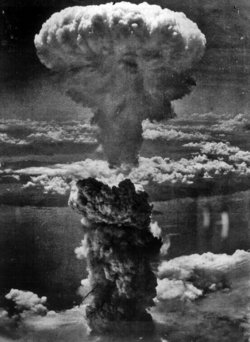
My God.
What a hellish nightmare!
Published on Sunday, June 3, 2007 by the Philadelphia Inquirer
What If Our Mercenaries Turn On Us?
by Chris Hedges
Armed units from the private security firm Blackwater USA opened fire in Baghdad streets twice in two days last week. It triggered a standoff between the security contractors and Iraqi forces, a reminder that the war in Iraq may be remembered mostly in our history books for empowering and building America’s first modern mercenary army.There are an estimated 20,000 to 30,000 armed security contractors working in Iraq, although there are no official figures and some estimates run much higher. Security contractors are not counted as part of the coalition forces. When the number of private mercenary fighters is added to other civilian military “contractors” who carry out logistical support activities such as food preparation, the number rises to about 126,000.
“We got 126,000 contractors over there, some of them making more than the secretary of defense,” said House defense appropriations subcommittee Chairman John Murtha (D., Pa.).
“How in the hell do you justify that?”
The privatization of war hands an incentive to American corporations, many with tremendous political clout, to keep us mired down in Iraq. But even more disturbing is the steady rise of this modern Praetorian Guard. The Praetorian Guard in ancient Rome was a paramilitary force that defied legal constraints, made violence part of the political discourse, and eventually plunged the Roman Republic into tyranny and despotism. Despotic movements need paramilitary forces that operate outside the law, forces that sow fear among potential opponents, and are capable of physically silencing those branded by their leaders as traitors. And in the wrong hands, a Blackwater could well become that force.
American taxpayers have so far handed a staggering $4 billion to “armed security” companies in Iraq such as Blackwater, according to House Oversight and Government Reform Committee Chairman Rep. Henry Waxman (D., Calif.). Tens of billions more have been paid to companies that provide logistical support. Rep. Jan Schakowsky (D., Ill.) of the House Intelligence Committee estimates that 40 cents of every dollar spent on the occupation has gone to war contractors. It is unlikely that any of these corporations will push for an early withdrawal. The profits are too lucrative.
Mercenary forces like Blackwater operate beyond civilian and military law. They are covered by a 2004 edict passed by American occupation authorities in Iraq that immunizes all civilian contractors in Iraq from prosecution.
Blackwater, barely a decade old, has migrated from Iraq to set up operations in the United States and nine other countries. It trains Afghan security forces and has established a base a few miles from the Iranian border. The huge contracts from the war - including $750 million from the State Department since 2004 - have allowed Blackwater to amass a fleet of more than 20 aircraft, including helicopter gunships. Jeremy Scahill, the author of Blackwater: The Rise of the World’s Most Powerful Mercenary Army, points out that Blackwater has also constructed “the world’s largest private military facility - a 7,000-acre compound near the Great Dismal Swamp of North Carolina.” Blackwater also recently opened a facility in Illinois (”Blackwater North”) and, despite local opposition, is moving ahead with plans to build another huge training base near San Diego. The company recently announced it was creating a private intelligence branch called “Total Intelligence.”
Erik Prince, who founded and runs Blackwater, is a man who appears to have little time for the niceties of democracy. He has close ties with the radical Christian Right and the Bush White House. He champions his company as a patriotic extension of the U.S. military. His employees, in an act as cynical as it is dishonest, take an oath of loyalty to the Constitution. But what he and his allies have built is a mercenary army, paid for with government money, which operates outside the law and without constitutional constraint.
Mercenary units are a vital instrument in the hands of despotic movements. Communist and fascist movements during the last century each built rogue paramilitary forces. And the appearance of Blackwater fighters, heavily armed and wearing their trademark black uniforms, patrolling the streets of New Orleans in the aftermath of Hurricane Katrina, may be a grim taste of the future. In New Orleans Blackwater charged the government $240,000 a day.
"It cannot happen here’ is always wrong,” the philosopher Karl Popper wrote. “A dictatorship can happen anywhere.”
The word contractor helps launder the fear and threat out of a more accurate term: “paramilitary force.” We’re not supposed to have such forces in the United States, but we now do. And if we have them, we have a potential threat to democracy. On U.S. soil, Blackwater so far has shown few signs of being an out-and-out rogue retainer army, though they looked the part in New Orleans. But were this country to become even a little less stable, outfits like Blackwater might see a heyday.
If the United States falls into a period of instability caused by another catastrophic terrorist attack, an economic meltdown that triggers social unrest, or a series of environmental disasters, such paramilitary forces, protected and assisted by fellow ideologues in the police and military, could ruthlessly abolish what is left of our eroding democracy. War, with the huge profits it hands to corporations, and to right-wing interests such as the Christian Right, could become a permanent condition.
And the thugs with automatic weapons, black uniforms and wraparound sunglasses who appeared on the streets in New Orleans could appear on our streets.
(Excuse me, a moment, but NOLA's streets are our streets. How could it be otherwise? Not only are New Orleanians Americans, but many, many Americans have, at one time or anouther, visited the Big Easy. New Orleans, as the unique city it was, belonged to all of us. Still does, what's left of it.)
Chris Hedges (hedgesscoop@aol.com) is a graduate of Harvard Divinity School and won a Pulitzer Prize as a foreign correspondent for the New York Times. He is author, mostly recently, of “American Fascists: The Christian Right and the War on America.”
(In accordance with Title 17 U.S.C. Section 107, this material is distributed without profit to those who have expressed a prior interest in receiving the included information for research and educational purposes. The Lantern has no affiliation whatsoever with the originator of this article nor is The Lantern endorsed or sponsored by the originator.)
....And The Truth Shall Set Us Free
Showing posts with label Blackwater. Show all posts
Showing posts with label Blackwater. Show all posts
Sunday, June 03, 2007


Sunday, May 13, 2007
No Matter The Topic, This Administration is Corrupt Beyond Our Wildest Imaginings
As Americans, we have our work cut out for us, over the next several generations, because that is how long it will take to fix the horrendous mess the Bush administration has made in a few short years.
This is a nightmare!
Two Hearings, One Reality
By William Rivers Pitt
t r u t h o u t Columnist
Friday 11 May 2007
The fur was most definitely flying in Washington, DC yesterday. Newspaper reports revealed a White House meeting between several GOP House members and Mr. Bush. Those congressmen, according to the stories, read the riot act to Bush regarding the situation in Iraq, and further warned him that the Republican support he has enjoyed to date will fall to dust if progress isn't made soon. Several reporters and pundits were reminded, by this, of that "Long Walk" to the Nixon White House taken by GOP senators seeking his resignation.
The main event on Thursday, however, was a House Judiciary oversight hearing chaired by Representative John Conyers (D-Michigan) and starring Attorney General Alberto Gonzales. The hearing was a reprise of the Senate Judiciary grilling Gonzales endured back in April, during which he deployed dozens of "I don't recall" replies to his questioners and essentially debased the entire concept of public testimony itself.
Thursday's hearing wasn't much different. Despite the best efforts of Conyers and his fellow committee members, the hearing became, for the most part, another empty exercise. House member after House member attempted to pin Gonzales down on some basic details surrounding the firing of several US attorneys, but had little success in the endeavor. "You can answer these questions in three sentences," Chairman Conyers noted at one point, but to no avail. The "I don't recall" answers from Gonzales were so thickly applied once again that, by mid-afternoon, most of the committee members began to preface their questions with, "You may not be able to answer this, but...." More often than not, they were correct in that assumption.
Another hearing took place on Capitol Hill yesterday that was truly chilling to observe. Representative John Murtha's (D-Pennsylvania) Subcommittee on Appropriations heard testimony from two investigators whose work has been focused on the phenomenon of private military contractors in Iraq. The first to give testimony was Jeremy Scahill, author of "Blackwater: Rise of the World's Most Powerful Mercenary Army." The second witness was Robert Greenwald, a documentary filmmaker who recently released a new film titled "Iraq for Sale: The War Profiteers."
Both men painted a stark picture of reality in Iraq. According to Scahill, there are tens of thousands of private military contractors - a kind euphemism for mercenaries - operating today in Iraq. They are paid with American tax revenues to the tune of hundreds of millions of dollars, while operating with virtually no oversight and free from the strictures of the Uniform Code of Military Justice. Dozens of acts of brutality and murder reportedly committed by these contractors have been alleged, but almost no contractor has been punished, sanctioned or even investigated for these acts. Because the Iraqi population does not make the distinction between American soldiers and these private contractors, the questionable activities of these contractors are blamed on US troops, further fanning the flames of outrage and vengeance.
Even more disturbing was the testimony offered by Greenwald. Some excerpts:
I remember clearly my interview with Stewart Scott, a former Halliburton employee. With pain and rage in his voice, he asked how dare Halliburton put its people up at five-star hotels while the soldiers, who he was there to help, were sleeping on the ground. I did not believe him at first, but then he began naming the hotels and the locations. It was all true.
I also spoke with Shane Ratliff, a truck driver from Ruby, South Carolina. He saw Halliburton advertising a job for truck drivers in Iraq and he signed up. When Shane started telling me that empty trucks were being driven across dangerous stretches of desert, I assumed he was mistaken. Why would they do that? Then he explained that Halliburton got paid for the number of trips they took, regardless of whether they were carrying anything. These unnecessary trips where putting the lives of truckers at risk, exposing drivers and co-workers to attack. This was the result of cost-plus, no-bid contracts.
Another young Halliburton worker named James Logsdon told me about the burn pits. Burn pits are large dumps near military stations where they would burn equipment, trucks, trash, etc. If they ordered the wrong item, they'd throw it in the burn pit. If a tire blew on a piece of equipment, they'd throw the whole thing into the burn pit. The burn pits had so much equipment they even gave them a nickname: "Home Depot."
The trucker said he would get us some photos. And I naively asked, how big are they, the size of a backyard swimming pool? He laughed and referred to one that he had seen that was 15 football fields large and burned around the clock! It infuriated him to have to burn stuff rather then give it to the Iraqis or to the military. Yet Halliburton was being rewarded each time they billed the government for a new truck or new piece of equipment. With a cost-plus contract, the contractors receive a percentage of the money they spend. As Shane told me, "It's a legal way of stealing from the government or the taxpayers' money." These costs eat up the money that could be used for other supplies.
Cost-plus, no-bid contracts are hopelessly undermining our efforts and costing the taxpayers billions. They do not operate within a free-market system and have no competition, but instead create a Stalinist system of rewarding cronies. In a letter from Sgt. Jon Lacore talking about the enormous amount of waste, he said, "I just can't believe that no one at all is going to jail for this or even being fired or forced to resign."
The information put forth in this second hearing is placed in better context when held up to the debate over the supplemental Iraq war funding bill recently vetoed by Mr. Bush, who, along with his allies, have accused the Democrats of abandoning the troops during war by playing politics with the funding for their operations. One is forced to wonder, however, how much of the funding already allocated was frivolously wasted by profiteering military contractors who burn perfectly serviceable vehicles and make fake supply runs, all to cash in on the endless river of money flowing into the Iraqi sand.
Dina Rasor, author of the recently released book "Betraying Our Troops: The Destructive Results of Privatizing War," offered further insight into the private contractor phenomenon in a Huffington Post story on Wednesday. "There is also evidence that these contractor billings are sucking up the supplemental money and making other logistical areas suffer," wrote Rasor. "The supplemental money is flexible so that the Army can use it where they need it, but there is evidence that the contractor over-billings are taking away much needed money for replacing basic fighting equipment such as night vision goggles, workable radios and armored vehicles. The most common email that I get from Iraq makes the point that while troops can get luxury items at the large bases, such as soft-serve ice cream and plasma televisions, they can't get enough equipment needed to save their lives when they leave the cushy bases and go out into hostile areas. There is real resentment among the troops that KBR makes life very nice for the military brass and others at the base, but will not go out of the gate, as required, to make sure that they have the basics that they need."
Beyond this is one central point hammered home by Scahill and Greenwald: How can we justify the usage of private armies that profit from this war, and thus have a financial interest in continuing and expanding this war? Is this not a recipe for endless conflict and bottomless profiteering?
Two hearings took place on Thursday, both of which served to reveal one absolute and unavoidable reality: Oversight of and investigations into the activities of the Bush administration, especially regarding Iraq, could not have come soon enough. It was a day of many questions, a few answers, and plenty of truth for all to see.
(In accordance with Title 17 U.S.C. Section 107, this material is distributed without profit to those who have expressed a prior interest in receiving the included information for research and educational purposes. The Lantern has no affiliation whatsoever with the originator of this article nor is The Lantern endorsed or sponsored by the originator.)
....And The Truth Shall Set Us Free
Subscribe to:
Comments (Atom)