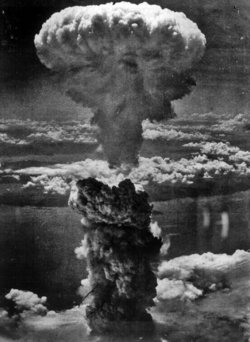
The next time the murder monkey holds his breath, let him turn blue...and while you're at it, put a plastic bag over his head?
In the meantime, how many more young men and women will die for a lie?
Dems: Fight over Iraq war has just begun
By ANNE FLAHERTY,
Associated Press Writer
Democrats may have lost the first round with President Bush on ending the war in Iraq since taking over Congress in January, but they say their fight has just begun.
In the months ahead, lawmakers will vote repeatedly on whether U.S. troops should stay and whether Bush has the authority to continue the war. The Democratic strategy is intended to ratchet up pressure on the president, as well as on moderate Republicans who have grown tired of defending Bush administration policy in a deeply unpopular war.
"I feel a direction change in the air," said Rep. John Murtha, D-Pa., chairman of the House panel that oversees military funding.
Democrats looked to the upcoming votes after losing a bruising battle with Bush on an emergency war spending bill. Lacking the two-thirds majority needed to overcome another presidential veto, Democrats dropped from the legislation a provision ordering troops home from Iraq beginning this fall.
Congress passed the revised $120 billion spending bill on Thursday, providing $95 billion for the wars in Iraq and Afghanistan through September. The House voted 280-142 to pass the bill, followed by a 80-14 vote in the Senate.
Democratic leaders said they hoped to ready the bill for Bush's signature by this Memorial Day weekend.
Democratic presidential rivals Hillary Rodham Clinton and Barack Obama (news, bio, voting record) both voted against the bill.
"I fully support our troops" but the measure "fails to compel the president to give our troops a new strategy in Iraq," said Clinton, D-N.Y.
"Enough is enough," Obama, an Illinois senator, declared, adding that Bush should not get "a blank check to continue down this same, disastrous path."
Their votes continued a shift in position for the two presidential hopefuls, both of whom began the year shunning a deadline for a troop withdrawal.
Thursday's legislative action capped weeks of negotiations with the White House, which agreed to accept some $17 billion more than Bush had requested as long as there were no restrictions on the military campaign.
"If all funding bills are going to be this partisan and contentious, it will be a very long year," Senate Republican leader Mitch McConnell (news, bio, voting record) of Kentucky said.
Democrats said they were successful in moving the war debate forward and would try again when Congress takes up spending bills for the 2008 fiscal year that begins Oct. 1.
"This debate will go on," vowed House Speaker Nancy Pelosi (news, bio, voting record), D-Calif.
"Senate Democrats will not stop our efforts to change the course of this war until either enough Republicans join with us to reject President Bush's failed policy or we get a new president,"
Senate Majority Leader Harry Reid D-Nev., said.
The Senate will go first when it considers a defense policy bill authorizing more than $600 billion in military spending. Sen. Carl Levin (news, bio, voting record), D-Mich., chairman of the Senate Armed Services Committee, plans to offer an amendment that would order troop withdrawals to begin within 120 days.
Sen. Robert Byrd (news, bio, voting record), D-W.Va., said he would press to repeal the 2002 resolution authorizing combat in Iraq.
Sen. John Warner (news, bio, voting record), R-Va., said Thursday that if the security situation in Iraq does not improve by mid-July, the president should consider adopting a new strategy there.
"It seems to me it's time for them (Iraqi troops) to ... step up," said Warner, R-Va.
The most critical votes on the war are likely to be cast in September when the House and Senate debate war funding for 2008. The House plans to consider one measure that would end combat by July 2008 and another intended to repeal Bush's authority to wage war in Iraq.
The September votes likely will come after Iraq war commander Gen. David Petraeus tells Congress whether Bush's troop buildup plan is working. Also due by September is an independent assessment of progress made by the Iraqi government.
"Those of us who oppose this war will be back again and again and again and again until this war has ended," said Rep. Jim McGovern, D-Mass.
The U.S. has spent more than $300 billion on Iraq military operations so far, according to the congressional Government Accountability Office.
(In accordance with Title 17 U.S.C. Section 107, this material is distributed without profit to those who have expressed a prior interest in receiving the included information for research and educational purposes. The Lantern has no affiliation whatsoever with the originator of this article nor is The Lantern endorsed or sponsored by the originator.)
....And The Truth Shall Set Us Free
Showing posts with label Emegency Supplemental War Funding. Show all posts
Showing posts with label Emegency Supplemental War Funding. Show all posts
Friday, May 25, 2007


Thursday, May 24, 2007
Another Blank Check, No Compromise, Betrayal
The only Democrat who has been against this war from day one, has consistently spoken out against it and has never voted for any blank check for the war preznit is Albert Gore.
Run, Al, Run
The question is not whether House Speaker Nancy Pelosi and Senate Majority Leader Harry Reid flinched in their negotiations with the Bush administration over the continuation of the Iraq occupation.
They did. Despite some happy talk about benchmarks that have been attached to the Iraq supplemental spending bill that is expected to be considered by Congress this week, the willingness of Pelosi and Reid to advance a measure that does not include a withdrawal timeline allows Bush to conduct the war as he chooses for much if not all of the remainder of his presidency. This failure to abide by the will of the people who elected Democrats to end the war will haunt Pelosi, Reid and their party -- not to mention the United States and the battered shell that is Iraq.
This "compromise" legislation is such an embarrassing example of what happens when raw politics overwhelms principle -- and political common sense -- that House Democrats have divided the $12O billion measure into two sections. That will allow Republicans and sold-out Democrats to vote for the president's Iraq funding, while anti-war Democrats and their handful of Republican allies can vote "no." Then both Democratic camps can vote separately for the second section -- including a federal minimum-wage increase and more than $8 billion in funding for domestic programs -- while Republicans oppose this section.
Presuming that both parts pass the House, they will then be sent to the Senate as a single bill for members of that chamber to accept or reject. The end result of this confusing set of legislative maneuvers will be twofold: Lots of House members will be able to avoid accountability for their votes, while Bush will get his blank check. Even Pelosi says she'll vote against the Iraq funding section of the House bill because it lacks "a goal or a timetable" for extracting U.S. troops from the conflict. But, no matter how she votes, Pelosi will have facilitated a process that gives the president more war funding than he had initially requested
But the real story now is not the refusal of the Democratic leaders of the House and Senate to hold steady in the face of the president's cynical claim that refusing him a blank check to maintain his war through the end of his presidency somehow threatens U.S. troops. That has happened and no matter what games are played with voting procedures, the reality is that the Democratic leadership has failed to lead at the most critical juncture.
The question that remains to be answered is a frustrating but significant one: How many Democrats and responsible Republicans will refuse to accept this ugly political calculus?
What we know is that there will be opposition. MoveOn.org, which provided critical cover for the Democratic leadership during earlier fights on the supplemental and related matters, is now urging all Democrats to vote "no" on the war funding -- and it is threatening in-district ad campaigns against Democrats and Republicans who back the measure.
The most genuinely anti-war members will not need any encouragement to reject the deal.
Senator Russ Feingold, the Wisconsin Democrat who has led the fight to get Congress to use the power of the purse to bring the troops home, immediately announced that he would not follow Reid into the abyss of surrender to a White House that is getting everything that it wants.
"Under the president's Iraq policies, our military has been over-burdened, our national security has been jeopardized, and thousands of Americans have been killed or injured. Despite these realities, and the support of a majority of Americans for ending the President's open-ended mission in Iraq, congressional leaders now propose a supplemental appropriations bill that does nothing to end this disastrous war," says Feingold. "I cannot support a bill that contains nothing more than toothless benchmarks and that allows the President to continue what may be the greatest foreign policy blunder in our nation's history."
Anticipating the cynical gamesmanship of the debate that will play out this week, the Wisconsin Democrat says, "There has been a lot of tough talk from members of Congress about wanting to end this war, but it looks like the desire for political comfort won out over real action. Congress should have stood strong, acknowledged the will of the American people, and insisted on a bill requiring a real change of course in Iraq."
Feingold is, of course, right. But how many senators will join him in voting "no"? That question is especially significant for the four Senate Democrats who are seeking their party's presidential nomination: New York's Hillary Clinton, Illinois' Barack Obama, Delaware's Joe Biden and Connecticut's Chris Dodd. Dodd says he is "disappointed" by the abandonment of the timeline demand; if he presses the point as he did on another recent war-related vote, he could force the hands of the other candidates. If either Clinton or Obama do go ahead and vote for the legislation, and certainly if both of them do so, they will create a huge opening for former North Carolina John Edwards, who has staked out the clearest anti-war position of the front runners for the nomination. But this is about more than just Democratic presidential politics: A number of Senate Republicans who are up for reelection next year -- including Maine's Susan Collins, Minnesota's Norm Coleman and Oregon's Gordon Smith -- may well be casting the most important votes of their political careers.
Collins, Coleman and Smith have tried to straddle the war debate. If they vote to give George Bush another blank check, however, they will have removed any doubt regarding how serious they are about ending the war -- as will their colleagues on both sides of the aisle.
----------------------------------------------------------------------
John Nichols' new book, THE GENIUS OF IMPEACHMENT: The Founders' Cure for Royalism has been hailed by authors and historians Gore Vidal, Studs Terkel and Howard Zinn for its meticulous research into the intentions of the founders and embraced by activists for its groundbreaking arguments on behalf of presidential accountability. After reviewing recent books on impeachment, Rolling Stone political writer Tim Dickinson, writes in the latest issue of Mother Jones, "John Nichols' nervy, acerbic, passionately argued history-cum-polemic, The Genius of Impeachment, stands apart. It concerns itself far less with the particulars of the legal case against Bush and Cheney, and instead combines a rich examination of the parliamentary roots and past use of the "heroic medicine" that is impeachment with a call for Democratic leaders to 'reclaim and reuse the most vital tool handed to us by the founders for the defense of our most basic liberties.'"
(In accordance with Title 17 U.S.C. Section 107, this material is distributed without profit to those who have expressed a prior interest in receiving the included information for research and educational purposes. The Lantern has no affiliation whatsoever with the originator of this article nor is The Lantern endorsed or sponsored by the originator.)
....And The Truth Shall Set Us Free
Wednesday, May 23, 2007
American Taxpayers Are The Purse Fillers.
Congress is not the only entity that can cut off war funding.
The Americans people, finaly, hold the purse strings, as they are the ones who fill the purse. STOP!
Democrats Pull Troop Deadline From Iraq Bill
By CARL HULSE
WASHINGTON, May 22 — Congressional Democrats relented Tuesday on their insistence that a war spending measure set a date for withdrawing American combat troops from Iraq. Instead, they moved toward a deal with President Bush that would impose new conditions on the Iraqi government.
The decision to back down was a wrenching reversal for leading Democrats, who saw their election triumph in November as a call to force an end to the war. It was the first time since taking power in Congress that the Democrats had publicly agreed to allow a vote on war financing without a timetable for troop withdrawal.
But even so, many Democrats, including House Speaker Nancy Pelosi of California, indicated that they would not support the war money, meaning that a significant number of Republicans would have to sign on to ensure the plan’s approval.
Ms. Pelosi made clear that if money for the war was going to be provided without a timeline for withdrawal, it would be without her personal support. “I would never vote for such a thing,” Ms. Pelosi said as she entered the office of Senator Harry Reid of Nevada, the majority leader, to put the final touches on the $120 billion proposal.
The Democrats’ decision to give way appeared likely to bring an end to a legislative battle that has raged since Feb. 5, when Mr. Bush first requested the additional war financing. Mr. Bush had insisted that the money not be bound by time constraints, and Democrats proved unable to override his veto of their initial, defiant vote in favor of a spending bill that called for a troop withdrawal to begin on Oct. 1.
In backing down on Tuesday, the Democratic leaders accepted an outcome that had appeared increasingly likely for weeks, particularly as Democrats became concerned that their defiance could be portrayed as indifference to the troops. But the Democrats have pledged to renew their fight this summer by seeking to attach timetables to subsequent war financing measures.
As late as last week the Democrats were still pursuing timelines in their negotiations with the White House, and the decision on Tuesday by Ms. Pelosi, Mr. Reid and other leaders to abandon them was not going over well with most antiwar lawmakers or with some activist groups that had argued that Democrats should seek to cut off money for the war.
“There has been a lot of tough talk from members of Congress about wanting to end this war, but it looks like the desire for political comfort won out over real action,” said Senator Russell D. Feingold, Democrat of Wisconsin, who was unsuccessful last week in his push for a withdrawal of combat troops by spring. “Congress should have stood strong, acknowledged the will of the American people, and insisted on a bill requiring a real change of course in Iraq.”
Other Democrats said they had no choice. “It was a concession to reality,” said Representative James P. Moran, Democrat of Virginia, who said he intended to oppose the war spending portion of the bill.
In an effort to appease antiwar Democrats, the party’s leaders plan to allow two votes in the House. One would provide the war money, and seems likely to be opposed by large numbers of Democrats. The other, separated out to allow more Democrats to vote in favor, would include popular measures that are also part of the package, including a minimum wage increase and $17 billion in added domestic and military spending.
The bills would then be combined into one and sent to the Senate, with the idea of getting the measure to the president by the weekend.
At the White House, officials said they were waiting for the actual language of the proposal. “We’re hopeful that discussions on the emergency war supplemental for the troops are nearing conclusion,” said a spokeswoman, Dana Perino.
Four Senate Democrats running for president sided with Mr. Feingold last week, but some said Tuesday that they could not say how they would vote on the new proposal without reviewing it.
Senator Christopher J. Dodd, Democrat of Connecticut, indicated that he had reservations.
“I am disappointed that there is no firm deadline in this version of the bill, because I believe that’s the only way to responsibly bring this war to an end,” Mr. Dodd said.
Senior Democratic officials said the final bill would probably be stripped of other features that Mr. Bush had previously resisted, including readiness standards that would have prevented troops from being returned to Iraq within one year of serving there or without adequate training and equipment unless Mr. Bush signed a waiver determining it was necessary.
The compromise legislation is far from a total victory for the president. It requires that the Iraqi government show progress on improving security and forging political unity. Mr. Bush has resisted Congressional intervention in the conduct of the war, and the benchmarks and new reporting requirements, which had strong Republican support in the Senate, represent new accountability in the eyes of many lawmakers. “We don’t have a veto-proof Congress,” Mr. Reid said. “But no one can say with any degree of veracity that we haven’t made great progress, and this bill is further proof of that.”
The measure would also force the White House and Congressional Republicans to accept significant new spending. Democrats say there is about $17 billion beyond the president’s initial request, with about $9 billion devoted to extra spending on military programs and health care, veterans’ health care and military base realignment. The remaining $8 billion goes to agriculture programs, additional Gulf Coast recovery efforts, children’s health care and other Democratic priorities. The minimum-wage increase will represent a domestic victory for Democrats.
“I think that it’s one thing to take care of the troops in Iraq, but it’s also something else to take care of their children, their spouses and their parents here at home,” said Representative James E. Clyburn of South Carolina, the No. 3 Democrat in the House.
Republicans said many of their lawmakers in the House and Senate would be less than enthusiastic about the additional spending but were unlikely to scuttle the compromise.
“Many of our members are not going to be happy by the amount of spending beyond the core purpose of this supplemental, which was to fund the troops,” said Senator Mitch McConnell of Kentucky, the Republican leader. “It’s not a deal I personally would have made. But if we can prevail on the core portion of the bill, my guess is that it will pass.”
Lawmakers said the final version was still being negotiated with the White House and Republicans to make certain it was acceptable to both, but it was expected to be voted on in the House on Thursday. “I think we’re very close to having things tied down,” said Representative David R. Obey, Democrat of Wisconsin and chairman of the Appropriations Committee.
While Democrats were bruised by the veto fight and their decision to back away from the showdown, they believe they are slowly gaining ground. “I view this as the beginning of the end of the president’s policy on Iraq,” said Representative Rahm Emanuel of Illinois, chairman of the House Democratic Caucus.
(In accordance with Title 17 U.S.C. Section 107, this material is distributed without profit to those who have expressed a prior interest in receiving the included information for research and educational purposes. The Lantern has no affiliation whatsoever with the originator of this article nor is The Lantern endorsed or sponsored by the originator.)
....And The Truth Shall Set Us Free
Thursday, April 26, 2007
Bring it on, Junior!
Senate OKs war bill with Iraq timeline
By ANNE FLAHERTY, Associated Press Writer 8 minutes ago
A defiant Democratic-controlled Senate passed legislation Thursday that would require the start of troop withdrawals from Iraq by Oct. 1, propelling Congress toward a historic veto showdown with President Bush on the war.
At the White House, the president immediately promised a veto.
"It is amazing that legislation urgently needed to fund our troops took 80 days to make its way around the Capitol. But that's where we are," said deputy press secretary Dana Perino.
The 51-46 vote was largely along party lines, and like House passage of the same bill a day earlier, fell far short of the two-thirds margin needed to overturn the president's threatened veto. Nevertheless, the legislation is the first binding challenge on the war that Democrats have managed to send to Bush since they reclaimed control of both houses of Congress in January.
"The president has failed in his mission to bring peace and stability to the people of Iraq," said Sen. Robert Byrd (news, bio, voting record), D-W.V., chairman of the Appropriations Committee. He later added: "It's time to bring our troops home from Iraq."
The $124.2 billion bill requires troop withdrawals to begin Oct. 1, or sooner if the Iraqi government does not meet certain benchmarks. The House passed the measure Wednesday by a 218-208 vote.
Across the Potomac River at the Pentagon, the top U.S. commander in Iraq, Gen. David Petraeus, told reporters the war effort likely will "get harder before it gets easier."
Republicans said the vote amounted to little more than political theater because the bill would be dead on arrival after reaching the White House. Bush said he will veto the bill so long as it contains a timetable on Iraq, as well as $20 billion in spending added by Democrats.
"The solution is simple: Take out the surrender date, take out the pork, and get the funds to our troops," said Republican Leader Mitch McConnell (news, bio, voting record), R-Ky.
Republicans Gordon Smith (news, bio, voting record) of Oregon and Chuck Hagel (news, bio, voting record) of Nebraska sided with 48 Democrats and Independent Bernard Sanders (news, bio, voting record) in supporting the bill. No Democrats joined the 45 Republicans in voting against it. Missing from the vote were GOP Sens. John McCain (news, bio, voting record) of Arizona and Lindsey Graham (news, bio, voting record) of South Carolina, both staunch advocates of the president's Iraq policy.
Sen. Joseph Lieberman (news, bio, voting record), I-Conn., sided with Republicans in opposing the bill.
"We delude ourselves if we think we can wave a legislative wand and suddenly our troops in the field will be able to distinguish between al-Qaida terrorism or sectarian violence. Or that Iraqis will suddenly settle their political differences because our troops are leaving," Lieberman said.
Democrats said the bill was on track to arrive on the president's desk by Tuesday, the anniversary of Bush's announcement aboard the deck of the USS Abraham Lincoln that major combat operations in Iraq had ended.
"The battle of Iraq is one victory in a war on terror that began on Sept. 11, 2001, and still goes on," Bush said on May 1, 2003, in front of a huge "Mission Accomplished" banner.
Bush since has acknowledged that the war has not progressed as he had hoped. After the November elections in which Democrats swept up enough seats to take the majority, he announced a new strategy that involved sending additional forces to Iraq.
Perino said earlier that if Democratic lawmakers timed the sending of the bill to the anniversary of Bush's speech, it would be "a ridiculous P.R. stunt."
"That is the height of cynicism, and absolutely so unfortunate for the men and women in uniform and their families who are watching the debate," she said Thursday morning.
As Democrats pushed through the bill, Petraeus depicted the situation in Iraq as "exceedingly complex and very tough." He said there have been some improvements in the two months since Bush's troop buildup began, but "there is vastly more work to be done across the board. ... We are just getting started with the new effort."
Asked at a Pentagon news conference Thursday about the impact on the effort in Iraq if that legislation passed, Petraeus said, "I have tried to stay clear of the political minefields of various legislative proposals."
Iraqi government spokesman Ali al-Dabbagh told The Associated Press the vote was not helpful.
"We see some negative signs in the decision because it sends wrong signals to some sides that might think of alternatives to the political process," al-Dabbagh said. "Coalition forces gave lots of sacrifices and they should continue their mission, which is building Iraqi security forces to take over."
In the House, two Republicans — Reps. Wayne Gilchrest (news, bio, voting record) of Maryland and Walter Jones (news, bio, voting record) of North Carolina — joined 216 Democrats in passing the bill. Voting no were 195 Republicans and 13 Democrats.
do after Bush's veto. One option would be funding the war through September as Bush wants but setting benchmarks that the Iraqi government must meet, he said.
Murtha chairs the House panel that oversees military funding.
"I think everything that passes will have some sort of condition (placed) on it," he said. Ultimately, Murtha added, the 2008 military budget considered by Congress in June "is where you'll see the real battle," he said.
Sen. Joseph Biden (news, bio, voting record), D-Del., said the immediate focus should stay on the president "making such a tragic mistake in vetoing this." Eventually, "I think he's going to have to accept constraint on his bad judgment here. . . . We've got to keep relentlessly putting pressure on him."
The nonpartisan Congressional Research Service has said the Army has enough bookkeeping flexibility to pay for operations in Iraq well into July. Lawmakers and Capitol Hill staff aides view mid- to late May as the deadline for completing the war spending bill to avoid hardships.
Copyright © 2007 The Associated Press. All rights reserved. The information contained in the AP News report may not be published, broadcast, rewritten or redistributed without the prior written authority of The Associated Press.
(In accordance with Title 17 U.S.C. Section 107, this material is distributed without profit to those who have expressed a prior interest in receiving the included information for research and educational purposes. The Lantern has no affiliation whatsoever with the originator of this article nor is The Lantern endorsed or sponsored by the originator.)
....And The Truth Shall Set Us Free
Subscribe to:
Posts (Atom)