Showing posts with label Iraq Surge. Show all posts

Tuesday, July 17, 2007

Reid Determined that GOP is Going To Lose Sleep

Over This War....

...Even if he has to keep them awake on the senate floor, debating it.

Democrats push all-night debate on Iraq

By ANNE FLAHERTY,

Associated Press Writer

Republicans dismissed as political theater a Democratic plan for an all-night session of the Senate to debate President Bush's military strategy in Iraq amid bipartisan proposals to redeploy U.S. troops.

The round-the-clock debate Tuesday night through Wednesday morning was intended as a way of pressuring Republican senators as well as Bush to act sooner rather than later on a change of course in Iraq.

"How many sleepless nights have our soldiers and their families had?" Sen. Dick Durbin, No. 2 in the Democratic leadership, said Monday.

Bush, meanwhile, paid a surprise visit to a gathering of GOP congressional staffers and White House aides trying to determine an effective strategy for communications about war policies. One participant said the president told the staffers he would not rethink his Iraq policies until after a critical military assessment in September.

Bush also said he had no confidence in the ability of international institutions — a reference to the United Nations — to salvage Iraq if the U.S. were to withdraw, according to the participant, who spoke anonymously because the meeting was intended to be private.

Also on Monday, the chairman of the Joint Chiefs of Staff, Marine Gen. Peter Pace, said the service chiefs were developing their own assessment of Iraq to present to Bush in September. Options include another troop buildup or maintaining current troop levels beyond September, Pace said.

Bush on Monday told Iraqi Prime Minister Nouri al-Maliki and other officials that continued U.S. support depends on political progress in Baghdad, White House spokesman Tony Snow said.


(In accordance with Title 17 U.S.C. Section 107, this material is distributed without profit to those who have expressed a prior interest in receiving the included information for research and educational purposes. The Lantern has no affiliation whatsoever with the originator of this article nor is The Lantern endorsed or sponsored by the originator.)

....And The Truth Shall Set Us Free

Sunday, July 08, 2007

How Many More? Senators, Reps?

For every day that passes from now 'til September, another 3 American military personnel will die, more will be wounded in body, mind and soul. That's if we're lucky.

God only knows how many more of the Iraqis George Bush claimed to be liberating will be killed or scarred for life, in one way or the other.

It is time to write Republicans; call them.

How many more have to die for lies, Senator?

Mr. Representative, would you go to Iraq, send your kid. Do you believe in the cause enough to refuse your salary for the war effort.

If not, vote against it.

How many must die for a pack of lies?


Here lie the victims of American Government lies, heroes all, but for the wrong cause.


....And The Truth Shall Set Us Free

Saturday, June 30, 2007

Pelosi and Reid Aren't Gonna Wait For September

Why wait for another pack of lies?

Dems to confront Bush again on Iraq pullout

Pelosi, Reid say House and Senate will vote in July --
won't wait for report on surge

Edward Epstein, Chronicle Washington Bureau
Saturday, June 30, 2007

Washington -- Speaker Nancy Pelosi threw down a new gauntlet Friday before President Bush and Republicans in Congress, saying the House will vote in July on legislation to withdraw almost all American troops from Iraq by April.

In the Senate, Majority Leader Harry Reid, D-Nev., said there also will be votes on the future course of the Iraq war next month, although he said he is consulting with other top Democrats on exactly what the legislation might entail.

The statements by Congress' top two Democrats mean that the renewed confrontation with Bush over Iraq won't wait until September, when the top U.S. commander in Iraq, Gen. David Petraeus, and Ryan Crocker, the U.S. ambassador to Baghdad, are scheduled to issue a report on how the surge of American troops has worked to quell sectarian violence in the Iraqi capital and other cities.

Pelosi and Reid, talking to reporters in the Capitol as Congress left town for its weeklong July Fourth break, made it clear that they want to pressure Republican members on their continued support for the war. They think a major break in GOP support for Bush is possible, after statements this week by senior Republican Sens. Richard Lugar of Indiana and George Voinovich of Ohio, who said Bush's strategy isn't working and called on him to start withdrawing the 160,000 U.S. forces in Iraq.

"We will put everyone on record,'' Pelosi said. "We're encouraged by the public demand for this. Hopefully, it will be heard by the president and the Republicans in Congress. I see some signs that that is happening."

The Democratic leaders recognize their July efforts could end the same way as last spring's showdown with the president over a withdrawal plan for the war, now in its fifth year at a cost of more than 3,500 American lives and an estimated $500 billion.

Bush vetoed the withdrawal plan, and Republicans stood solidly behind him in the narrowly divided Congress, blocking the needed two-thirds margin in both houses to override a veto.
Democrats eventually passed, and Bush signed, a bill providing about $96 billion to pay for the Iraq war through the end of the federal fiscal year on Sept. 30 -- with no provision to withdraw troops.

Criticism from their own base rained down on the Democratic leaders for giving in, but Pelosi and Reid say they will try again and again, hoping for Republican defections or the election next year of an anti-war Democratic president and Democratic Congress.

"The American public is sending the message to their representatives that we need to change direction in Iraq,'' Pelosi's top deputy, House Majority Leader Steny Hoyer, D-Md., said. "The American public sees the current direction is not working.''

The Democrats admit that public frustration with the continuing war in Iraq has hurt their popularity after six months in control of Congress, especially after they campaigned on a platform that promised a new direction in Iraq policy.

The new withdrawal legislation in the House would require a troop pullout beginning within 120 days of enactment and completed by April, Hoyer said. It may be a stand-alone bill, meaning it could be considered separately from military appropriations legislation. Democrats also may offer other proposals seeking to wind down U.S. involvement.

The only troops that would be allowed to stay in Iraq would be those needed to directly combat al Qaeda, train Iraqi forces and protect the U.S. Embassy complex in Baghdad.

The Senate's vehicle for any proposals will be the fiscal 2008 military authorization bill, which Reid said Friday will be taken up when the Senate returns July 9.

"We're hoping Republicans will want to join us,'' said Rep. Chris Van Hollen of Maryland, who heads the Democrats' 2008 campaign effort to keep their newly won House majority.

Some Republican leaders, even after the statements by Lugar and Voinovich, are appealing to Congress to give the surge strategy more time.

"I've believed all spring and I continue to believe that we ought to allow General Petraeus the opportunity to succeed,'' House Minority Leader John Boehner, R-Ohio, said this week. "Now, he has a plan in place. He's had his full reinforcement of troops only about two or three weeks.''
Boehner added, "At the end of the day, making sure that we have a secure Iraq is in the best interest of all Americans, and for that matter, the rest of the world, because losing in Iraq will allow al Qaeda and their like-minded souls around the country to expand, to increase their ranks.''

His deputy, House Minority Whip Roy Blunt, R-Mo., said he doesn't see a major fissure in House GOP ranks, at least not yet.

"I believe our members will largely reserve their decision on what needs to happen in Iraq until September. I believe that's a reasonable position to take,'' Blunt said.

E-mail Edward Epstein at eepstein@sfchronicle.com.
This article appeared on page A - 8 of the San Francisco Chronicle


(In accordance with Title 17 U.S.C. Section 107, this material is distributed without profit to those who have expressed a prior interest in receiving the included information for research and educational purposes. The Lantern has no affiliation whatsoever with the originator of this article nor is The Lantern endorsed or sponsored by the originator.)

....And The Truth Shall Set Us Free

Monday, June 25, 2007

Get Ready For It..The Bad News

Not that we ever expected anything else.

They'll Break the Bad News on 9/11
By Frank Rich
The New York Times
Sunday 24 June 2007

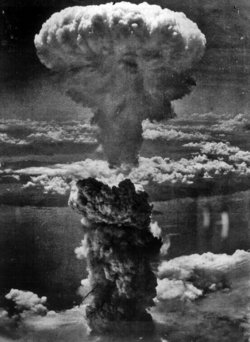
By this late date we should know the fix is in when the White House's top factotums fan out on the Sunday morning talk shows singing the same lyrics, often verbatim, from the same hymnal of spin. The pattern was set way back on Sept. 8, 2002, when in simultaneous appearances three cabinet members and the vice president warned darkly of Saddam's aluminum tubes. "We don't want the smoking gun to be a mushroom cloud," said Condi Rice, in a scripted line. The hard sell of the war in Iraq - the hyping of a (fictional) nuclear threat to America - had officially begun.

America wasn't paying close enough attention then. We can't afford to repeat that blunder now. Last weekend the latest custodians of the fiasco, our new commander in Iraq, Gen. David Petraeus, and our new ambassador to Baghdad, Ryan Crocker, took to the Sunday shows with two messages we'd be wise to heed.

The first was a confirmation of recent White House hints that the long-promised September pivot point for judging the success of the "surge" was inoperative. That deadline had been asserted as recently as April 24 by President Bush, who told Charlie Rose that September was when we'd have "a pretty good feel" whether his policy "made sense." On Sunday General Petraeus and Mr. Crocker each downgraded September to merely a "snapshot" of progress in Iraq. "Snapshot," of course, means "Never mind!"

The second message was more encoded and more ominous. Again using similar language, the two men said that in September they would explain what Mr. Crocker called "the consequences" and General Petraeus "the implications" of any alternative "courses of action" to their own course in Iraq. What this means in English is that when the September "snapshot" of the surge shows little change in the overall picture, the White House will say that "the consequences" of winding down the war would be even more disastrous: surrender, defeat, apocalypse now. So we must stay the surge. Like the war's rollout in 2002, the new propaganda offensive to extend and escalate the war will be exquisitely timed to both the anniversary of 9/11 and a high-stakes Congressional vote (the Pentagon appropriations bill).

General Petraeus and Mr. Crocker wouldn't be sounding like the Bobbsey Twins and laying out this coordinated rhetorical groundwork were they not already anticipating the surge's failure. Both spoke on Sunday of how (in General Petraeus's variation on the theme) they had to "show that the Baghdad clock can indeed move a bit faster, so that you can put a bit of time back on the Washington clock." The very premise is nonsense. Yes, there is a Washington clock, tied to Republicans' desire to avoid another Democratic surge on Election Day 2008. But there is no Baghdad clock. It was blown up long ago and is being no more successfully reconstructed than anything else in Iraq.

When Mr. Bush announced his "new way forward" in January, he offered a bouquet of promises, all unfulfilled today. "Let the Iraqis lead" was the policy's first bullet point, but in the initial assault on insurgents now playing out so lethally in Diyala Province, Iraqi forces were kept out of the fighting altogether. They were added on Thursday: 500 Iraqis, following 2,500 Americans. The notion that these Shiite troops might "hold" this Sunni area once the Americans leave is an opium dream. We're already back fighting in Maysan, a province whose security was officially turned over to Iraqi authorities in April.

In his January prime-time speech announcing the surge, Mr. Bush also said that "America will hold the Iraqi government to the benchmarks it has announced." More fiction. Prime Minister Nuri al-Maliki's own political adviser, Sadiq al-Rikabi, says it would take "a miracle" to pass the legislation America wants. Asked on Monday whether the Iraqi Parliament would stay in Baghdad this summer rather than hightail it to vacation, Tony Snow was stumped.

Like Mr. Crocker and General Petraeus, Mr. Snow is on script for trivializing September as judgment day for the surge, saying that by then we'll only "have a little bit of metric" to measure success. This administration has a peculiar metric system. On Thursday, Peter Pace, the departing chairman of the Joint Chiefs of Staff, called the spike in American troop deaths last week the "wrong metric" for assessing the surge's progress. No doubt other metrics in official reports this month are worthless too, as far as the non-reality-based White House is concerned. The civilian casualty rate is at an all-time high; the April-May American death toll is a new two-month record; overall violence in Iraq is up; only 146 out of 457 Baghdad neighborhoods are secure; the number of internally displaced Iraqis has quadrupled since January.

Last week Iraq rose to No. 2 in Foreign Policy magazine's Failed State Index, barely nosing out Sudan. It might have made No. 1 if the Iraqi health ministry had not stopped providing a count of civilian casualties. Or if the Pentagon were not withholding statistics on the increase of attacks on the Green Zone. Apparently the White House is working overtime to ensure that the September "snapshot" of Iraq will be an underexposed blur. David Carr of The Times discovered that the severe Pentagon blackout on images of casualties now extends to memorials for the fallen in Iraq, even when a unit invites press coverage.

Americans and Iraqis know the truth anyway. The question now is: What will be the new new way forward? For the administration, the way forward will include, as always, attacks on its critics' patriotism. We got a particularly absurd taste of that this month when Harry Reid was slammed for calling General Pace incompetent and accusing General Petraeus of exaggerating progress on the ground.

General Pace's record speaks for itself; the administration declined to go to the mat in the Senate for his reappointment. As for General Petraeus, who recently spoke of "astonishing signs of normalcy" in Baghdad, he is nothing if not consistent. He first hyped "optimism" and "momentum" in Iraq in an op-ed article in September 2004.

Come September 2007, Mr. Bush will offer his usual false choices. We must either stay his disastrous course in eternal pursuit of "victory" or retreat to the apocalypse of "precipitous withdrawal." But by the latest of the president's ever-shifting definitions of victory, we've already lost. "Victory will come," he says, when Iraq "is stable enough to be able to be an ally in the war on terror and to govern itself and defend itself." The surge, which he advertised as providing "breathing space" for the Iraqi "unity" government to get its act together, is tipping that government into collapse. As Vali Nasr, author of "The Shia Revival," has said, the new American strategy of arming Sunni tribes is tantamount to saying the Iraqi government is irrelevant.

For the Bush White House, the real definition of victory has become "anything they can get away with without taking blame for defeat," said the retired Army Gen. William Odom, a national security official in the Reagan and Carter administrations, when I spoke with him recently. The plan is to run out the Washington clock between now and Jan. 20, 2009, no matter the cost.

Precipitous withdrawal is also a chimera, since American manpower, materiel and bases, not to mention our new Vatican City-sized embassy, can't be drawn down overnight. The only real choice, as everyone knows, is an orderly plan for withdrawal that will best serve American interests. The real debate must be over what that plan is. That debate can't happen as long as the White House gets away with falsifying reality, sliming its opponents and sowing hyped fears of Armageddon. The threat that terrorists in civil-war-torn Iraq will follow us home if we leave is as bogus as Saddam's mushroom clouds. The Qaeda that actually attacked us on 9/11 still remains under the tacit protection of our ally, Pakistan.

As General Odom says, the endgame will start "when a senior senator from the president's party says no," much as William Fulbright did to L.B.J. during Vietnam. That's why in Washington this fall, eyes will turn once again to John Warner, the senior Republican with the clout to give political cover to other members of his party who want to leave Iraq before they're forced to evacuate Congress. In September, it will be nearly a year since Mr. Warner said that Iraq was "drifting sideways" and that action would have to be taken "if this level of violence is not under control and this government able to function."

Mr. Warner has also signaled his regret that he was not more outspoken during Vietnam. "We kept surging in those years," he told The Washington Post in January, as the Iraq surge began. "It didn't work." Surely he must recognize that his moment for speaking out about this war is overdue. Without him, the Democrats don't have the votes to force the president's hand. With him, it's a slam dunk. The best way to honor the sixth anniversary of 9/11 will be to at last disarm a president who continues to squander countless lives in the names of those voiceless American dead.


(In accordance with Title 17 U.S.C. Section 107, this material is distributed without profit to those who have expressed a prior interest in receiving the included information for research and educational purposes. The Lantern has no affiliation whatsoever with the originator of this article nor is The Lantern endorsed or sponsored by the originator.)

....And The Truth Shall Set Us Free

Saturday, May 05, 2007

If Surge Fails, Watch Out For Iran.

Reporter: Fall 2007 could see an 'uptick' in US-Iran tensions
05/04/2007 @ 3:50 pm
Filed by Michael Roston

A top journalist tracking the dispute between Iran and the international community over its nuclear program has suggested in an interview published at the Harpers' website that an uptick in tensions between the US and Iran could emerge this fall.

"If by September the 'surge' is deemed to be ineffective, the Bush Administration may seek to blame Iran for its continuing difficulties," Laura Rozen, a top correspondent for the American Prospect and the Washington Monthly, told Harpers' Ken Silverstein. "So I would not be surprised later this fall to see an uptick in Iran-bashing from elements of the administration and associated constituencies trying to gin up confrontation."

Rozen was participating in an interview with Silverstein on the state of the Iranian dispute and US-Iran relations. She also noted that tensions were in check at the moment because currently "there's not a great desire at the State Department or the Pentagon for another war."

In the interview, Rozen also criticized the Bush administration for publicly announcing its intention of funding groups inside Iran that are critical of the current regime.

"Since the Bush Administration announced that it would fund opposition groups, the Iranian government has arrested intellectuals, writers, and activists who have participated in conferences abroad that were sponsored by private NGOs, and accused them of being involved in American-backed efforts to overthrow the regime," she argued. "The international consequences may not have been carefully thought out."

Rozen also accused advocates of funding Iranian opposition groups, such as the American Enterprise Institute's Michael Ledeen and Richard Perle, of using such efforts to catalyze military conflict with Iran.

"One wonders if those advocating for heavy Washington involvement see that strategy as a means of deepening U.S. involvement to a point that military confrontation ultimately becomes inevitable," she explained.

The full interview can be read at this link.

(In accordance with Title 17 U.S.C. Section 107, this material is distributed without profit to those who have expressed a prior interest in receiving the included information for research and educational purposes. The Lantern has no affiliation whatsoever with the originator of this article nor is The Lantern endorsed or sponsored by the originator.)

....And The Truth Shall Set Us Free